
The right weekend warrior project trailer in La Vista depends on what you’re hauling, not the name of the project. A car, mower, or piece of equipment calls for a different setup than loose yard debris or renovation waste. Start with the cargo, then choose a trailer that suits its dimensions, weight, and loading method.
It’s normal to wonder whether a dump trailer or car hauler fits your plans, and whether your tow vehicle can handle the combination. This guide compares Trailer Rental Near Me’s 22-foot tilt-deck car hauler and 7x12 dump trailer, keeping GVWR and payload figures distinct. It also explains how to assess vehicle ratings, trailer weight, and cargo weight together.
You’ll find practical steps for choosing a setup, planning a La Vista-area haul, and avoiding common capacity mix-ups. The tilt deck is designed for vehicles and equipment; the dump trailer is for suitable loose materials and debris, with concrete and brick prohibited. From a vehicle move to a yard cleanup, “The Trailers You Wish Your Buddy Owned” starts with matching the trailer to the load.
Key Takeaways
- Match the trailer to the cargo and loading method before planning the trip.
- Compare GVWR with payload to understand what each rating says about trailer capacity.
- For a weekend warrior project trailer La Vista haul, weigh the cargo and check your specific vehicle’s tow rating, payload, GCWR, and hitch rating.
- Consider loading features such as the tilt deck and winch for vehicles, or the hydraulic lift and spreader gate for suitable loose materials.
- Plan the load and project timing before booking to help avoid unnecessary trips.
Start Your La Vista Weekend Project by Matching the Trailer to the Cargo
A common planning mistake is choosing a trailer before listing what needs to move. A La Vista landscaping refresh, garage cleanout, or home-improvement project can involve very different cargo: a vehicle or piece of equipment, or loose yard materials and debris. Those loads call for different trailer designs and loading approaches.
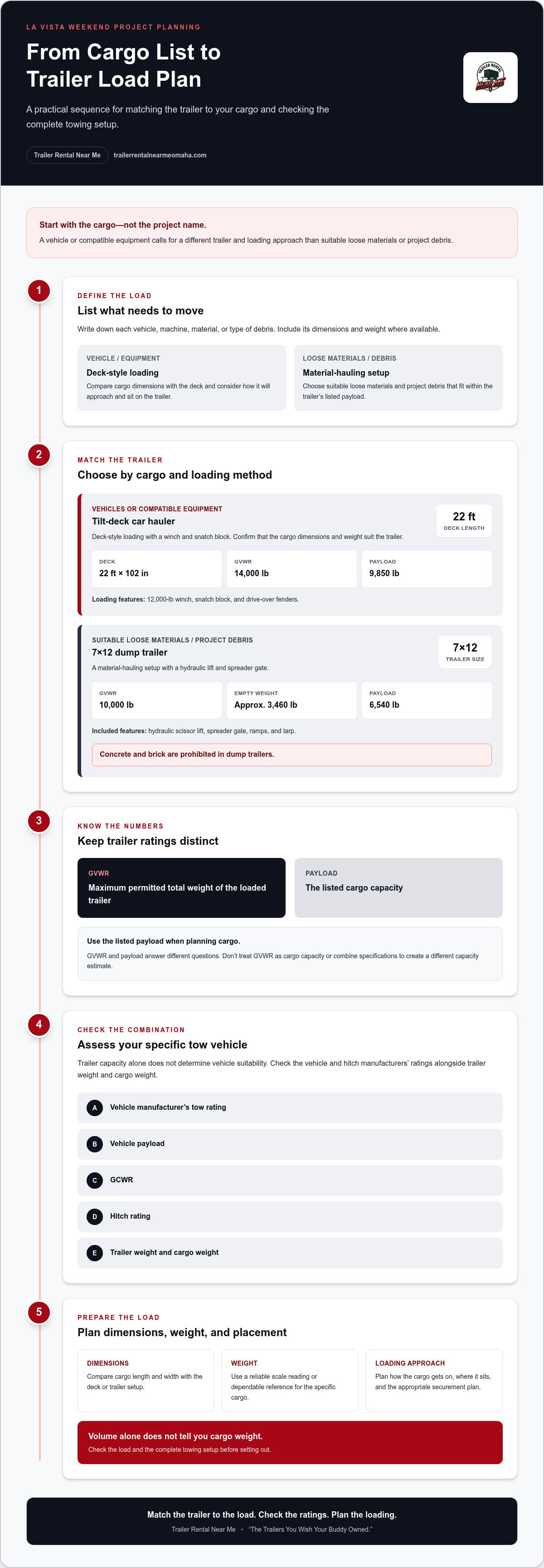
Use this order: identify the cargo, choose a trailer that suits its loading needs, then check whether your specific tow vehicle can handle the complete loaded combination. For a weekend warrior project trailer La Vista decision, listing each item and finding its weight and dimensions can help prevent an unsuitable setup or an avoidable extra trip. A basic overview of types of trailers and their components can also help clarify how trailer designs differ.
When a project calls for a tilt-deck car hauler
A tilt-deck car hauler is intended for vehicles or compatible equipment that need a deck-style loading setup. The La Vista-area option has a 22 ft x 102 in deck, but those dimensions don’t guarantee that every vehicle or machine will fit. Compare the cargo’s overall length and width with the deck, and consider its weight and how it will approach and sit on the trailer. The included winch and snatch block support winching, but they don’t replace a suitable loading and securement plan. The tilt-deck car hauler setup is the relevant option for vehicle hauling.
When a dump trailer fits material hauling
For suitable loose materials, landscaping loads, and project debris, a dump trailer offers a different loading approach from a deck-style hauler. The 7x12 trailer has a hydraulic scissor lift and spreader gate, along with ramps and a tarp. These features support its role in material hauling, but the cargo still needs to stay within the trailer’s verified payload. Concrete and brick are prohibited in dump trailers.
Before choosing, ask: Is the load a vehicle or equipment, or loose material and debris? How will it be loaded? What does it weigh, and can the specific tow vehicle handle the trailer and cargo together? Answering those questions helps La Vista homeowners choose a practical setup for yard work or renovation hauling. The Trailers You Wish Your Buddy Owned starts with matching the equipment to the work.
Compare the La Vista Project Trailer Options by Capacity and Loading Needs
Specifications help narrow the choice, but they answer different questions. Deck dimensions describe available space. Loading features show how cargo gets on or off. Capacity figures set trailer limits, but don’t establish whether a particular tow vehicle can handle a loaded trailer.
| Trailer | Intended cargo and loading approach | Verified specifications |
|---|---|---|
| Tilt-deck car hauler | Vehicles or compatible equipment; deck-style loading with winch and snatch block | 22 ft x 102 in deck; 14,000-lb GVWR; 9,850-lb payload |
| 7x12 dump trailer | Suitable loose materials and project debris; hydraulic lift and spreader gate | 10,000-lb GVWR; approximately 3,460-lb empty weight; 6,540-lb payload |
GVWR is the maximum permitted total weight of the loaded trailer. Payload is the listed cargo capacity. These are separate specifications: don’t treat GVWR as the amount of cargo you can load, or combine the figures to create a new capacity estimate. To assess the complete towing setup, consider the trailer and cargo weights alongside the ratings for your specific tow vehicle.
What the tilt-deck specifications mean for a vehicle project
The 22 ft x 102 in deck gives you dimensions to compare with a vehicle or piece of equipment. The listed 9,850-lb payload is a separate limit to consider when assessing cargo weight. The trailer includes drive-over fenders, a 12,000-lb winch, and a snatch block. Review the tilt-deck car trailer details as you plan a vehicle-hauling setup.
What the dump-trailer specifications mean for material projects
The dump trailer’s 10,000-lb GVWR, approximately 3,460-lb empty weight, and 6,540-lb payload are distinct figures. Use the stated payload when planning cargo; don’t infer a different limit from the other specifications. Ramps and a tarp complement the hydraulic scissor lift and spreader gate. For material-hauling plans, see the La Vista dump trailer details. Concrete and brick are prohibited in dump trailers.
For a weekend warrior project trailer La Vista plan, compare the cargo’s size, weight, and loading needs before settling on an option. Review the available trailer options as you organize the project.
Check Tow-Vehicle Compatibility and Load Plans Before You Haul
A trailer’s listed capacity is only one part of the towing decision. Suitability depends on the specific vehicle configuration and the complete loaded combination. Work through the ratings and cargo weights before loading, especially if your La Vista project involves heavy equipment or dense landscaping material.
- Identify the cargo. List each vehicle, machine, material, or type of debris you plan to carry.
- Find its weight. Use a reliable scale reading or dependable reference for the specific cargo. Don’t assume volume alone tells you the weight.
- Check the ratings. Review the vehicle manufacturer’s tow rating, vehicle payload, GCWR, and hitch rating. Consider these alongside trailer weight and cargo weight.
- Plan the loading. Confirm the cargo’s dimensions, loading approach, and placement before setting out.
How to assess your specific tow vehicle
Use the vehicle and hitch manufacturers’ ratings for your exact configuration, not a general description of your vehicle. Engine, drivetrain, cab, and other configuration details can affect applicable ratings. Assess the tow rating, available vehicle payload, GCWR, and hitch rating together with the trailer’s weight and cargo weight. No half-ton, three-quarter-ton, or other broad vehicle class is automatically suitable.
How to plan project materials without exceeding limits
Dirt, gravel, rock, sand, mulch, and topsoil can vary in weight. Use a reliable reference that matches the material and its condition, or get a measured weight. Don’t assume a particular volume will fit within a trailer’s payload without verified weight information. Keep concrete and brick out of dump-trailer plans. For more detail on handling a material load, review this dump trailer loading guidance.
Before hauling, make sure the ratings and cargo weight work together for your specific setup. If the weight is uncertain, resolve that before loading rather than relying on appearance or a rough volume estimate. This makes a weekend warrior project trailer La Vista plan more practical and deliberate.
Choose and Book the Right Project Trailer for La Vista
Once you’ve assessed the cargo, loading method, and tow-vehicle ratings, choose according to the job. A vehicle or compatible piece of equipment points to the tilt-deck car hauler. Suitable landscaping material or project debris points to the dump trailer. Match the trailer to the load, not simply to the fact that it’s a weekend project.
Which trailer fits your weekend project?
Moving a car to a repair location or transporting compatible equipment? Start with the tilt-deck option, then compare the cargo’s dimensions and weight with the trailer’s deck and payload specifications. The Omaha car trailer rental guide offers related vehicle-hauling context.
Clearing branches, moving mulch, or handling suitable loose material from a La Vista yard project? Consider the dump trailer. Confirm the material weight and payload before planning how much to carry. For more local material-hauling context, use the La Vista dump trailer guide.
Take the next step with a project-ready rental
Before booking, settle four details: what you’re hauling, the cargo’s weight and dimensions, how you’ll load it, and when the project needs the trailer. Check that the specific tow vehicle’s ratings work with the trailer and loaded cargo as a complete combination. This preparation helps you choose a setup suited to the work and reduces the chance of revising the plan after loading begins.
Once those details are clear, compare the available options and select the trailer that matches your project. For La Vista hauling, a practical setup starts with an accurate load plan. “The Trailers You Wish Your Buddy Owned” means capable equipment matched to the job at hand.
Turn Your La Vista Project Plan Into a Clear Next Step
Give the project a simple order of operations. Note what needs to happen before hauling, what work follows, and where each task fits in your schedule. For a weekend warrior project trailer La Vista plan, this keeps hauling from becoming an afterthought that disrupts the rest of the work.
Keep the sequence handy as you prepare. A clear plan makes it easier to focus on the work and adjust if the job changes.
With a workable plan in place, you’re ready to make progress on your project.
Frequently Asked Questions
Can a half-ton truck tow a 14,000-lb GVWR trailer?
Not automatically. “Half-ton” doesn’t identify the exact truck configuration or establish that it can tow this trailer. Check the owner’s manual and ratings for the specific truck, then compare them with the planned loaded combination. Don’t use the trailer’s GVWR as evidence of the truck’s towing capacity. If you can’t establish that the applicable ratings accommodate the setup, don’t assume it’s suitable.
How do GVWR and payload differ on a rental trailer?
They’re separate trailer limits: GVWR applies to the total loaded trailer, while payload refers to cargo capacity. Write both figures beside your load estimate rather than treating one as a substitute for the other. Keep vehicle ratings separate from trailer ratings, too. A trailer’s payload figure doesn’t tell you how much weight the tow vehicle can carry or tow.
Can I haul concrete or brick in a dump trailer?
No. Concrete and brick aren’t permitted in dump trailers. Keep them out of the planned load, even if they’re part of a home renovation or landscaping project. Identify those materials while sorting project debris so they don’t get mixed into a load intended for the trailer. Plan a separate way to handle them rather than treating them as ordinary loose material.
Does the tilt-deck car hauler include a winch?
Yes. The tilt-deck car hauler includes a 12,000-lb winch and a snatch block. The winch’s rating describes the winch, not the trailer’s payload or the tow vehicle’s capacity. Keep those ratings distinct when planning a vehicle move. The cargo still needs to suit the deck and trailer, and the complete towing combination must be appropriate.
How should I estimate the weight of dirt or gravel for a project?
Ask the material supplier for weight information that matches the specific dirt or gravel and how it’s being sold. If you’re working from a volume estimate, treat it as an estimate until you can compare it with a documented load weight. Keep the supplier’s figures or receipt with your project notes. That gives you a clearer basis for planning than judging a pile by appearance.
Which trailer should I consider for a La Vista home project?
For a vehicle move, consider the tilt-deck car hauler; for suitable landscaping material or debris, consider the dump trailer. The right match depends on the cargo and how you’ll handle it. Trailer Rental Near Me serves La Vista and the surrounding Omaha area, including Bellevue, Papillion, Ralston, Council Bluffs, and Bennington. The service area also includes Omaha.

Article by
Chuck Crom
Chuck Crom is the owner of Trailer Rental Near Me, serving Omaha, La Vista, Papillion, Bellevue, Gretna, Elkhorn, and the surrounding Nebraska and western Iowa communities. With years of hands-on experience towing, hauling, and helping customers choose the right trailer for the job, Chuck specializes in making trailer rentals simple, safe, and stress-free.
He writes practical, no-nonsense articles covering trailer safety, towing tips, weight ratings, loading techniques, equipment transport, landscaping projects, home renovations, vehicle hauling, and everything in between. His goal is to help renters avoid common mistakes, stay safe on the road, and get their projects done with confidence.
When he's not helping customers or creating educational content, Chuck is focused on growing a locally owned business built on honest advice, quality equipment, and exceptional customer service.


