
What if the biggest cleanup delay isn’t loading debris, but choosing a trailer that can’t carry it or reach the right disposal point? A Papillion construction site cleanup trailer should match the material, its weight, and the hauling plan before the first load goes in.
Trailer size is only one part of the decision. Check payload, tow limits, loading access, and what the trailer is designed to haul. Matching the equipment to the cleanup plan helps avoid overloading the trailer or tow vehicle.
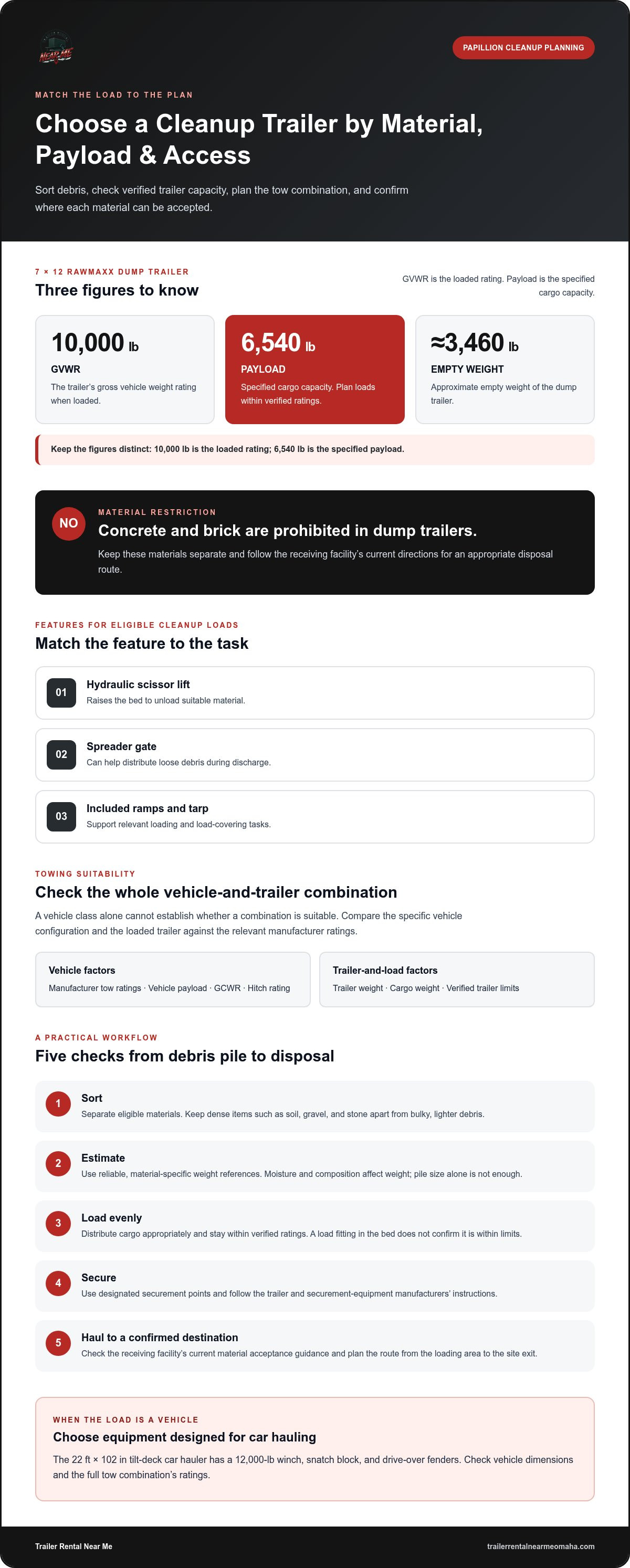
For eligible construction debris, the 7x12 RawMaxx dump trailer has a 10,000-lb GVWR and a 6,540-lb payload. Its hydraulic scissor lift, spreader gate, ramps, and tarp support practical loading and unloading. Concrete and brick are prohibited in dump trailers. Towing suitability depends on your specific vehicle configuration, manufacturer ratings, hitch rating, trailer weight, and cargo weight.
This guide explains how to match debris and payload, plan a safe tow, and coordinate loading and disposal around a Papillion jobsite. The same planning approach can help with projects in La Vista, Omaha, Bellevue, Papillion, Ralston, Council Bluffs, and Bennington.
Key Takeaways
- Sort construction debris by material before choosing a trailer or planning loads. Keep concrete and brick out of dump trailers.
- Use reliable material-weight references to estimate load weight, then plan within the trailer’s verified payload.
- Check your specific vehicle’s manufacturer ratings, payload, GCWR, and hitch rating before towing.
- Plan loading access and the disposal destination alongside your Papillion construction site cleanup trailer choice.
- Follow a consistent workflow: sort, estimate, load evenly, secure the debris, and haul.
Planning a Papillion Construction Site Cleanup Before Choosing a Trailer
A renovation crew in Papillion may finish a workday with torn-out drywall, offcuts, packaging, or soil and landscaping material waiting for removal. Those materials differ in weight, handling, and disposal options. Before selecting a Papillion construction site cleanup trailer, list what needs to go, decide how it will be loaded, and identify where it can be accepted. This quick assessment helps prevent a mismatch between debris, payload, site access, and disposal plans.
Construction waste can include materials with different handling and recycling options. Understanding Construction Waste provides background on why sorting matters. For a specific load, follow the receiving facility’s current guidance on what it accepts.
Sort construction debris before planning loads
Separate eligible debris by material. Keep dense items such as soil, gravel, and stone apart from bulky, lighter items such as lumber, drywall, or packaging. Concrete and brick are prohibited in dump trailers, so keep them out. Store them separately and follow the receiving facility’s current directions for an appropriate disposal route.
Material weight varies with type, moisture, and composition. Look for reliable, material-specific weight references for dirt, gravel, rock, sand, mulch, and topsoil. Prefer published information from an authoritative government or manufacturer source, and choose a reference that closely matches the material’s condition. Don’t estimate weight from pile size or appearance alone.
Account for Papillion jobsite access and disposal
Walk the route between the loading area and the site exit. Look for tight turns, overhead or side clearances, soft or uneven ground, and enough space for equipment and workers to load safely. Even a trailer that suits the debris needs a practical loading position and room to maneuver.
Before hauling, review the receiving facility’s current material acceptance guidance and plan around its instructions. For eligible cleanup loads, the 7x12 dump trailer rental is a suitable option to consider after sorting materials and mapping access.
Sorting first clarifies which materials can be loaded together, how to estimate their weight, and where each type can go.
How to Match a Papillion Cleanup Job to a Dump Trailer
Choose a trailer for the task, not just the project site. The 7x12 RawMaxx dump trailer is suited to eligible debris and material hauling. If the job is to move a vehicle, use equipment designed for car hauling rather than treating a dump trailer as a substitute. Keeping these tasks distinct helps you plan the right equipment for each load.
| Project load | Planning concern | Relevant trailer feature |
|---|---|---|
| Eligible loose soil or landscaping material | Moisture and composition affect weight estimates. | Hydraulic scissor lift for unloading suitable material. |
| Eligible loose debris | Consider how material should be discharged at the destination. | Spreader gate for controlled discharge. |
| A vehicle requiring transport | Check vehicle dimensions and the full tow combination’s ratings. | 22 ft x 102 in tilt-deck car hauler, with a 12,000-lb winch, snatch block, and drive-over fenders. |
What the 7x12 dump trailer specifications tell you
The 7x12 RawMaxx dump trailer has a 10,000-lb GVWR, approximately 3,460-lb empty weight, and 6,540-lb payload. GVWR is the trailer’s gross vehicle weight rating, not its cargo allowance. Payload is the specified carrying capacity. The 10,000-lb GVWR is the loaded rating; the 6,540-lb payload is the specified cargo capacity.
Which dump trailer features help with cleanup work?
The hydraulic scissor lift raises the bed to unload suitable material, while the spreader gate can help distribute loose debris during discharge. Included ramps and a tarp support relevant loading and load-covering tasks. These features don’t make prohibited materials acceptable: concrete and brick are prohibited in dump trailers. OSHA’s construction safety guidance offers broader jobsite safety information.
Towing suitability depends on the specific vehicle configuration, manufacturer tow ratings, vehicle payload, GCWR, hitch rating, trailer weight, and cargo weight. A vehicle class alone can’t establish whether a combination is suitable. Compare these factors with the dump trailer’s verified limits. For vehicle transport, review the trailer options for hauling and cleanup to identify the appropriate equipment type.
A Safe, Efficient Loading and Hauling Plan for Papillion Debris
A good cleanup plan follows the debris from the work area to the receiving facility. Use this sequence to organize loading and make decisions using verified weights and ratings rather than guesswork.
- Sort. Separate eligible materials so dense debris isn’t mixed indiscriminately with bulky, lighter items. Concrete and brick are prohibited in dump trailers.
- Estimate. Consult reliable published weight references for the specific material and its condition. Moisture and composition affect weight, so a volume estimate alone isn’t enough.
- Load evenly. Distribute cargo appropriately across the trailer and stay within its verified ratings. Don’t pile the weight at one end or assume a load is within limits just because it fits in the bed.
- Secure. Use the trailer’s designated securement points and follow the trailer and securement-equipment manufacturers’ instructions. Use the included tarp as appropriate for covering the load.
- Haul and unload. Follow the planned route, then unload only at a receiving facility that accepts the material. Confirm its current acceptance guidance before departure.
Load eligible debris without exceeding verified limits
Before towing, compare the tow vehicle and trailer manufacturers’ ratings for the exact combination. Suitability depends on the vehicle configuration, tow rating, vehicle payload, gross combination weight rating (GCWR), hitch rating, trailer weight, and cargo weight. A vehicle category alone can’t establish whether a particular setup is suitable. Include people and other items carried in the vehicle when reviewing its payload limit.
For a Papillion construction site cleanup trailer, treat the trailer’s stated payload and gross vehicle weight rating as separate limits, then plan the material load accordingly. If debris is wet, mixed, or difficult to characterize, a dry-material reference won’t provide an exact weight. Reassess the plan before adding more.
Coordinate hauling and unloading for the site
Plan a clear path from the loading area to the site exit and onward to the receiving facility. Account for turning room, ground conditions, loading equipment, and where the trailer can be positioned without disrupting work. The tarp is an included trailer feature; incorporate it into the load plan without assuming it replaces any separate requirements. For more practical operating guidance, see this guide to using a dump trailer rental.
Arrange a Papillion Construction Cleanup Trailer Rental
Before scheduling a Papillion construction site cleanup trailer, bring the job details together: eligible debris types, estimated load weight, loading conditions, tow-vehicle ratings, site access, and the facility receiving the material. This review helps you choose equipment for the work instead of adjusting the cleanup plan after loading begins.
Prepare the rental plan for your Papillion project
List the materials to remove and find a suitable weight reference for each. Keep concrete and brick out of dump trailers. Note how debris will be loaded, where the trailer can be positioned, and whether the route through the site allows enough room to turn and maneuver.
Review the tow vehicle’s manufacturer ratings and hitch rating for the specific setup. Consider vehicle payload, GCWR, trailer weight, and planned cargo weight together. Identify the intended disposal destination and follow its current material acceptance guidance. These details help determine whether the 7x12 dump trailer suits the eligible cleanup load.
For another local reference, see the La Vista 7x12 dump trailer guide. Use it alongside the specifications and loading plan for your Papillion job.
Make the next step straightforward
Once you’ve mapped the materials, access, tow setup, and disposal destination, use the dump trailer scheduling page to arrange the equipment online. The 7x12 RawMaxx dump trailer is suited to eligible construction cleanup loads and includes a hydraulic scissor lift, spreader gate, ramps, and tarp.
Have the material categories and load plan ready when scheduling. This keeps the rental decision tied to the work and gives you a clear starting point for coordinating cleanup.
“The Trailers You Wish Your Buddy Owned.”
Set Your Cleanup Crew Up for a Smooth Start
Turn the trailer decision into a clear jobsite handoff. Before cleanup begins, make sure the crew knows where to stage debris, who will manage loading, and how to keep the work area clear as materials move out. A shared plan helps prevent mixed piles and last-minute loading confusion.
For your Papillion construction site cleanup trailer, treat the rental plan as one part of the job schedule. Coordinate the trailer with the work sequence, assign someone to track what is loaded, and keep the route through the site usable for workers and equipment. Clear responsibilities help manage cleanup from the first load to the last.
With the jobsite organized and the equipment choice made, you’re ready to put the plan into action.
Choose the 7x12 dump trailer for eligible cleanup debris and schedule it online for your project.
Frequently Asked Questions
Can I put concrete or brick in a construction cleanup dump trailer?
No. Keep them out even if a disposal facility accepts them. Separate these materials at the jobsite so they don’t get mixed into eligible debris during cleanup. For other materials, identify the debris type before loading and follow the receiving facility’s current acceptance guidance.
What is the payload of the 7x12 RawMaxx dump trailer?
The 7x12 RawMaxx dump trailer has a specified payload of 6,540 pounds. Treat that as a firm planning limit, not a target to exceed because material looks light or takes up little space. A compact load of damp soil, for example, can weigh more than its size suggests. Estimate the material carefully and allow for uncertainty rather than relying on appearance.
How do I know whether my vehicle can tow a dump trailer?
Compare the exact vehicle and trailer combination with the ratings in the vehicle and trailer manufacturers’ documentation. Review tow rating, vehicle payload, gross combination weight rating (GCWR), hitch rating, trailer weight, and cargo weight. Include occupants and other items in the vehicle when assessing payload. A broad vehicle category or model name alone can’t establish suitability because ratings can vary by configuration and equipment.
Can a dump trailer haul dirt, gravel, mulch, or topsoil?
These materials may be suitable, but the specific load must stay within the trailer’s ratings and the receiving facility’s acceptance rules. Weight varies with moisture and composition, so wet topsoil or damp gravel can differ substantially from a dry reference. Use a reliable source that closely matches the material, then plan the load by weight, not just by bed volume.
What should I check before hauling construction debris from a Papillion site?
Before a Papillion construction site cleanup trailer leaves the job, confirm the debris is eligible, the load is within applicable ratings, and the tow setup matches manufacturer guidance. Check that the cargo is secure, the route allows safe maneuvering, and the receiving facility currently accepts the material. Separate prohibited debris at the site and coordinate who will oversee loading and unloading.

Article by
Chuck Crom
Chuck Crom is the owner of Trailer Rental Near Me, serving Omaha, La Vista, Papillion, Bellevue, Gretna, Elkhorn, and the surrounding Nebraska and western Iowa communities. With years of hands-on experience towing, hauling, and helping customers choose the right trailer for the job, Chuck specializes in making trailer rentals simple, safe, and stress-free.
He writes practical, no-nonsense articles covering trailer safety, towing tips, weight ratings, loading techniques, equipment transport, landscaping projects, home renovations, vehicle hauling, and everything in between. His goal is to help renters avoid common mistakes, stay safe on the road, and get their projects done with confidence.
When he's not helping customers or creating educational content, Chuck is focused on growing a locally owned business built on honest advice, quality equipment, and exceptional customer service.


