
A roofing dump trailer gives a tear-off crew a place to collect old shingles and other roofing debris for hauling away from the job. A Papillion roofing debris trailer can help keep loose material gathered in one spot instead of spread across the work area. The trailer holds the debris; the crew still needs a suitable tow vehicle and a plan for disposal.
A Papillion roofing debris trailer can help keep tear-off waste contained and make it easier to move from the roof to a loading area. This guide covers how to plan trailer placement and debris handling, what to consider before renting, and how a dump trailer fits into a roofing project. Renting a trailer provides hauling equipment, not roof removal or a complete disposal service.
Key Takeaways
- A dump trailer gathers roofing tear-off debris in one loading area, helping keep the worksite more organized.
- Plan where the trailer will be placed, how debris will reach it, and how the load will be removed from the Papillion property.
- Match the trailer and debris load to your tow vehicle’s specific ratings, including its tow rating, payload, GCWR, and hitch rating.
- The 7x12 RawMax 10k dump trailer has a 6,540-lb payload and a hydraulic scissor lift; concrete and brick are prohibited.
- Learn how trailer rental can support a roofing project, and when a dump trailer is a better fit than a car hauler or utility trailer.
Hauling construction materials and debris
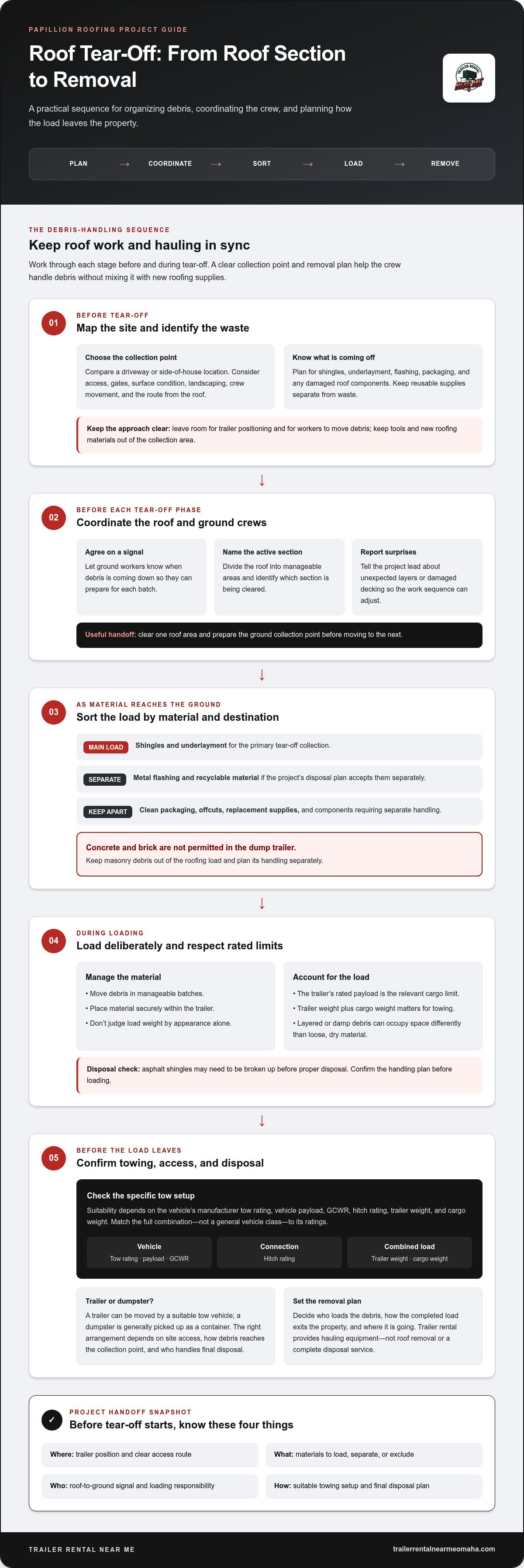
Roofing work creates more than shingle waste. Tear-off can also leave underlayment, flashing, packaging, and damaged roof components. Before work starts, identify the materials, choose a staging area, and keep reusable supplies separate from waste. In Papillion, planning these steps ahead helps prevent clean materials from being mixed into the disposal load.
Map the route from the roof to the trailer’s planned position. Consider the driveway, gates, landscaping, and how far workers will carry debris. A spot near the side of the house may shorten the route from a roof ladder, while the front drive may offer more loading room. Keep the collection area clear of tools and new roofing materials so workers can move debris without crossing the installation area.
Sort debris by type as the crew works. A practical site plan can separate:
- Shingles and underlayment for the main tear-off load.
- Metal flashing and other recyclable material, if the project’s disposal plan accepts it separately.
- Packaging and clean offcuts from new materials.
- Roofing components that need separate handling under the project’s disposal arrangements.
Material type affects loading and removal. Shingles can be bulky, while layered or damp debris can take up space differently from loose, dry material. Don’t judge a load by appearance alone. The relevant limit is the trailer’s rated payload, and the combined trailer and cargo weight also matters for towing. A load plan should account for the trailer, the debris, and the specific tow vehicle’s ratings. For a guide to Papillion project logistics, a dump trailer rental can provide a dedicated place to gather tear-off material.
Keep the loading area organized as debris accumulates. Move material in manageable batches, place it securely within the trailer, and exclude anything the disposal plan does not accept. Concrete and brick are not permitted in the dump trailer, so keep masonry debris out of the roofing load and plan its handling separately. Clear separation helps the crew track what is loaded and what needs another destination.
Before removing the first shingle, decide who will load the debris, where the trailer will sit, and how the completed load will leave the property. These decisions connect roof work with hauling. A basement-clearing crew in Papillion reportedly finished within two hours, but roofing timelines vary with the roof, crew, and debris workflow. The practical lesson is to plan the collection point and removal sequence before tear-off, rather than work out access and sorting during the project.
Roofing debris and tear-off hauling
Efficient tear-off hauling starts with coordination between the roof and ground crews. Before work begins, divide the roof into manageable areas and agree on how each will be cleared. For a Papillion roofing debris trailer project, assign someone to signal when debris is coming down. This handoff lets ground workers prepare for each batch without interrupting roof work.
Sequencing matters on roofs with multiple layers or mixed components. As each section opens, identify what the crew finds, such as shingles, underlayment, flashing, or damaged decking. Unexpected layers can affect the removal pace and the space needed on the ground. Quick updates between roof and ground crews help keep the hauling plan in step with the work.
Keep replacement materials separate from tear-off activity. Store new shingles and underlayment away from the route used to carry old material. Separate clean packaging from used roofing components so the crew can distinguish installation supplies from waste. This is especially useful when roof replacement also involves sheathing repairs.
Coordinate debris removal with the roofing sequence instead of waiting until the whole roof is stripped. If the crew finishes one slope before moving to another, ground workers can clear the first area and prepare for the next. This gives the foreman a clearer view of progress and helps avoid a backlog at the end of tear-off. Include these handoffs in the Papillion roofing debris trailer plan and roof schedule.
- Agree on a signal between the roof crew and the workers below.
- Identify the active roof section before each tear-off phase.
- Keep replacement supplies apart from removed roofing components.
- Record unexpected layers or damaged decking for the project lead.
Mixed roofing materials can make removal less predictable. Gather metal flashing separately from shingle bundles, and coordinate damaged decking with repair work. Keep the project lead informed as materials appear so the crew can adjust the sequence instead of treating every roof section the same way.
For a Papillion roofing debris trailer project, align the trailer’s role with the crew’s actual tear-off sequence. The available trailer types serve different hauling tasks, so the job’s material and workflow should guide the selection. Clear handoffs help workers know what moves next and keep removal coordinated with the roofing work.
We Haul It says asphalt shingles may need to be broken up before proper disposal. Confirm how the crew will handle that step before loading, and align the hauling plan with the materials as they come off the roof.
Roofing debris trailer delivery and removal
Plan trailer placement, the loading route, and removal before tear-off. In Papillion, compare a driveway location with a street-side spot, considering access, surface condition, and crew movement. Keep the drop area clear of vehicles, roofing supplies, and branches. A clear approach helps the driver position the trailer and gives workers room to move debris.
A roofing debris trailer and a dumpster both collect project waste, but they are handled differently. A trailer can be moved by a suitable tow vehicle, while a dumpster is generally picked up as a container. The right arrangement depends on site access, how debris reaches the collection point, and who handles final disposal. A narrow driveway or a long carry from the roof may affect which setup suits the site.
Placement affects whether permits or other local rules apply. A trailer on private property raises different questions from one occupying a public street or right-of-way. Identify the property boundary and intended drop area before delivery, then plan for access and local placement rules. Requirements can differ between Papillion addresses and project sites.
Where can roofing shingles and other roofing debris be disposed of near Papillion? Use a disposal facility or waste program that accepts roofing debris, and follow its material-acceptance rules. Asphalt shingles, underlayment, flashing, and packaging may require separate handling. Keep concrete and brick out of the dump trailer, and do not mix unrelated materials into the roofing load.
Book around the confirmed roof-work date, not just the expected tear-off day. Weather or material delivery can shift the schedule. Decide when the trailer should arrive, how long loading is expected to take, and when it should leave. This helps avoid arrival before the site is ready or leaving the trailer on site after debris removal is complete.
Before delivery, walk the route from the street to the planned placement area. Look for low branches, tight turns, parked vehicles, and soft or uneven ground. Clear obstacles and mark the intended spot. If the trailer will be near a garage or work zone, leave room to open gates and move debris without blocking the crew.
During loading, keep debris contained and distribute it instead of building one unstable mound. Before removal, clear loose pieces from around the trailer and confirm the route remains open. A range of trailer options can help match equipment to the material and hauling plan. The key decisions are placement, accepted disposal destination, and a removal schedule that follows the roofing work.
What roofing debris trailer rental services are available in Papillion, Nebraska?
For a Papillion roof replacement, renting a trailer provides a dedicated container for tear-off waste. It does not include roof removal, loading labor, or disposal. Plan each task separately: the roofing crew removes the materials, the project team loads the debris, and the disposal plan determines where the load goes.
Start by matching the trailer type to the material and worksite. A dump trailer is designed for hauling loose debris and can suit a project with shingles, underlayment, and roofing scraps. A utility trailer may suit different cargo and loading needs. The right choice depends on the debris, the loading method, access at the Papillion property, and the tow vehicle’s specific ratings.
Before arranging a rental, write down the project details that affect equipment selection:
- Roofing material, such as asphalt shingles, metal flashing, or underlayment.
- Where the trailer can sit without blocking the driveway or crew’s access.
- How debris will move from the roof to the trailer, including the route and loading method.
- Who will arrange transport and disposal after the trailer is loaded.
Towing suitability depends on the vehicle configuration, manufacturer’s tow rating, payload, GCWR, hitch rating, trailer weight, and cargo weight. A vehicle’s general class alone does not establish whether a particular combination is suitable. Compare the actual trailer and debris load with the vehicle’s ratings before travel, and keep the load contained and balanced as shingles accumulate.
Clarify which tasks the rental covers before the work date. Equipment rental is different from a full-service hauling job, which may include debris removal and management of its destination. For example, a homeowner may have the roofing crew handle tear-off while arranging trailer rental and disposal separately. Assigning these tasks clearly avoids assuming the rental includes labor or waste processing.
Timing depends on the roofing schedule. Set the intended start date, identify when tear-off will begin, and decide how long the trailer needs to remain on site. Weather delays can change the sequence, so organize the rental around the updated plan. At Papillion properties with narrow drives or limited staging space, choose the trailer location before materials arrive.
To choose a trailer, compare the debris, loading plan, site access, and towing setup. The right match suits the materials and logistics without exceeding the vehicle’s ratings.
Trailer Rental Near Me: 22'x102 14k Tilt Deck Car Hauler Rental
Trailer Rental Near Me offers the 7x12 RawMax 10k Dump Trailer Rental for projects that need a trailer for roofing debris. It has a 10,000-lb GVWR, approximately 3,460-lb empty weight, and a 6,540-lb payload. Its hydraulic scissor lift, spreader gate, ramps, and tarp support different hauling tasks. Concrete and brick are prohibited.
The 22'x102 14k Tilt Deck Car Hauler Rental serves a different purpose: moving vehicles or equipment, not loose roofing tear-off. Choose based on the cargo, loading method, and worksite plan. For a roofing debris load, compare the dump trailer’s payload with the cargo and your tow vehicle’s specific ratings, including tow rating, payload, GCWR, and hitch rating.
Contact Trailer Rental Near Me to discuss a trailer for your Papillion roofing project.
Set up your next roofing project with a clear plan
Before tear-off, decide who will load the debris, where the trailer will sit, and how the load will leave the property. This simple sequence connects equipment decisions to the roof schedule. For a Papillion roofing debris trailer project, map the route from the work area to the collection point and leave room for crew movement and material handling.
Match the trailer to the job, not just the roof’s size. Consider the debris type, staging space, loading approach, and towing setup. A plan built around these details helps avoid last-minute changes and gives the roofing crew a more organized start.
Trailer Rental Near Me offers equipment for different hauling needs. Review the options and choose the next step that fits your project’s material and logistics.
With the hauling plan settled, you can focus on moving the roofing work forward.
Frequently Asked Questions
What is a Roofing Dump Trailer Used For?
A roofing dump trailer collects tear-off waste, such as shingles and underlayment, in one place for hauling away. A roofing crew can load debris into the trailer instead of leaving it scattered around the driveway. The trailer is hauling equipment, not a roofing or disposal service. Plan loading and disposal separately, and keep prohibited materials out of the load.
What trailer sizes and weight capacities are available for roofing debris?
The available dump trailer has a 7 ft × 12 ft bed, 10,000-lb GVWR, approximately 3,460-lb empty weight, and 6,540-lb payload. GVWR is the trailer’s maximum loaded weight rating; payload refers to cargo capacity. Match the debris load to the payload and the tow vehicle’s ratings, including tow rating, vehicle payload, GCWR, and hitch rating. Concrete and brick aren’t permitted.
Do Papillion or Sarpy County rules require permits for placing a dumpster or debris trailer?
Placement affects whether local permits or rules apply. A trailer on private property raises different questions from one on a public street or right-of-way. Identify the property boundary and intended drop area, then follow local placement rules.

Article by
Chuck Crom
Chuck Crom is the owner of Trailer Rental Near Me, serving Omaha, La Vista, Papillion, Bellevue, Gretna, Elkhorn, and the surrounding Nebraska and western Iowa communities. With years of hands-on experience towing, hauling, and helping customers choose the right trailer for the job, Chuck specializes in making trailer rentals simple, safe, and stress-free.
He writes practical, no-nonsense articles covering trailer safety, towing tips, weight ratings, loading techniques, equipment transport, landscaping projects, home renovations, vehicle hauling, and everything in between. His goal is to help renters avoid common mistakes, stay safe on the road, and get their projects done with confidence.
When he's not helping customers or creating educational content, Chuck is focused on growing a locally owned business built on honest advice, quality equipment, and exceptional customer service.


