
What if the debris pile, not the trailer’s size, determines whether your haul goes smoothly? With a construction debris trailer rental Omaha project, material weight, restrictions, and disposal-site rules all matter. A load can look manageable and still exceed a trailer’s payload limit.
It helps to plan the loading, towing, and drop-off together. The 7x12 RawMaxx dump trailer has a 10,000-lb GVWR and a 6,540-lb payload. It also features a hydraulic scissor lift and spreader gate, with ramps and a tarp included. Concrete and brick are prohibited in dump trailers, so identify and separate those materials before loading.
This guide explains how to estimate debris weight, sort materials, and plan a disposal run around Omaha. You’ll also learn what to confirm about facility acceptance, load covering, and towing compatibility before departure. A clear plan can help prevent an overloaded trailer or a load that the destination won’t accept.
Key Takeaways
- Sort renovation debris, yard waste, and clean fill into separate planning categories. The destination determines what it accepts.
- Compare a dump trailer with a roll-off dumpster by considering loading location, who handles transport, and how disposal will be coordinated.
- For a construction debris trailer rental Omaha project, estimate material weight and confirm the receiving facility’s current requirements before loading.
- Assess towing suitability using your vehicle’s specific configuration and ratings, not a general vehicle-class rule.
Planning Construction Debris Hauling in Omaha: Start With the Job
Before choosing a hauling method, identify what needs to move and where it can be accepted. A renovation pile, yard cleanup, and load of clean fill are useful planning categories, but they don’t guarantee that a particular destination will accept the material. Sorting the debris early helps you spot restrictions before the materials are mixed together or loaded.
Volume alone can be misleading. A loose pile of lumber takes up space differently from dense, damp material, and moisture can add weight. Payload is the cargo weight a trailer can carry. Keep the payload limit in mind along with the type and condition of the debris. A load that fits inside the trailer can still be too heavy.
Which construction debris are you hauling?
Make an inventory before settling on a hauling plan. List items such as lumber, drywall, roofing, branches, leaves, soil, and other yard waste. Note whether materials are mixed, wet, bulky, or compacted. Concrete and brick are prohibited in dump trailers. Mixed loads may also be subject to different receiving-facility rules, so check the current requirements of the Omaha-area destination you plan to use.
Sorting can also help you identify reusable or recyclable materials that can be separated from debris headed for disposal. The overview of construction waste management explains common waste types and approaches such as recycling and disposal. Use it for background, then base your plan on the receiving facility’s current rules.
When does a trailer-based haul fit the project?
With a trailer-based haul, you handle loading, towing, and the disposal trip. This approach may suit a project where debris can be gathered near the loading area and you can take it to a destination that accepts the load. For a construction debris trailer rental Omaha project, plan the full route from the debris pile to drop-off, rather than focusing only on how quickly the trailer can be filled.
A roll-off service follows a different workflow: a container is placed for loading, and removal is coordinated through that service. Neither approach fits every job. Compare site access, how the debris will be loaded, who handles transportation, and how disposal will be coordinated. If a self-managed haul suits your project, the 7x12 dump trailer rental is a local option for eligible project debris.
Dump Trailer or Roll-Off Dumpster? Compare the Omaha Project Workflows
The main difference is who moves the debris and how it reaches its destination. With a trailer, you load it, tow it, and make the disposal trip. A roll-off arrangement centers on placing a container at the worksite and coordinating its removal. WM’s page describes roll-off containers for construction and cleanup jobs and lists 15-, 20-, and 30-yard options. Those details describe WM’s offering, not every provider or project.
| Planning factor | Dump trailer | Roll-off dumpster |
|---|---|---|
| Loading location | Load the trailer where it can be positioned at the site. | A container is placed at the worksite for loading. |
| Transport responsibility | You arrange a suitable tow setup and take the loaded trailer to its destination. | Removal is coordinated through the roll-off service. |
| Disposal coordination | You plan the trip and confirm the destination accepts the load. | Coordinate container placement and removal. Acceptance depends on the destination and materials. |
Which option suits a renovation, cleanup, or contractor job?
Choose based on the worksite and workflow, not just the size of the debris pile. A renovation with a clear loading area may suit a self-managed trailer trip. For a cleanup that produces debris over several days, on-site container placement may be more practical. Contractors should consider site access, loading pace, and whether the crew wants to manage transportation. Neither option is automatically cheaper or faster, and no disposal facility accepts every material.
What changes when you tow the debris yourself?
With a trailer, transportation becomes part of the job. Match the loaded trailer to your vehicle’s specific configuration and manufacturer ratings, including tow rating, vehicle payload, GCWR, and hitch rating. Secure the load, plan the route and disposal stop, and confirm that the destination accepts the materials before leaving. A construction debris trailer rental Omaha project is easier to manage when towing and drop-off are planned alongside loading.
Use the dump-trailer workflow guide to help plan loading and operation. If a trailer suits your workflow, explore the available trailer options.
Plan the Omaha-Area Debris Haul: Check Materials, Weight, and Disposal
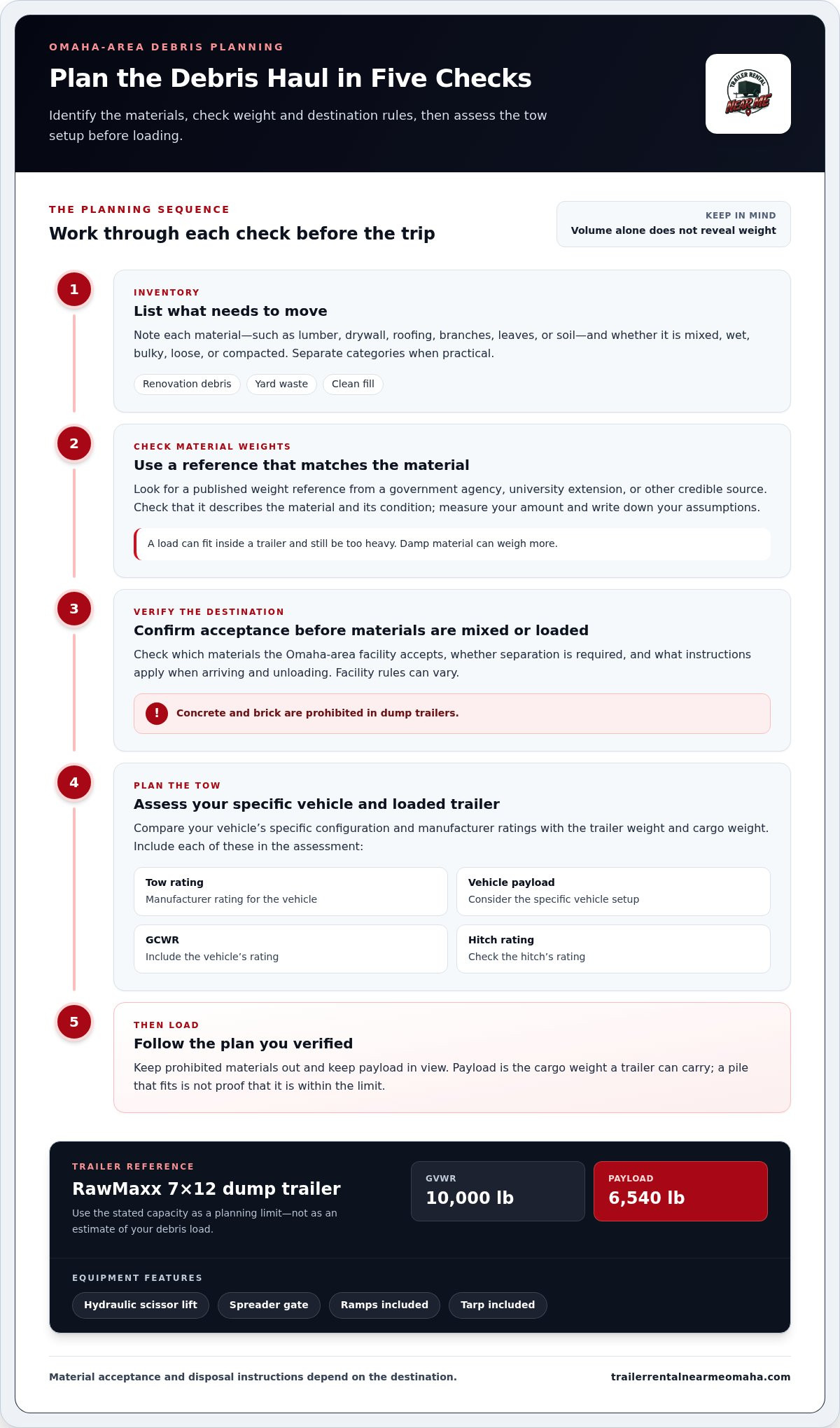
Plan the haul in order: identify the materials, estimate their weight using a suitable reference, confirm where they can go, assess the tow setup, and then load. This sequence can help prevent problems at the scale, on the road, or at the destination.
- Inventory the debris. List each material and note whether it is loose, bulky, mixed, wet, or compacted. Separate categories when practical.
- Check material weights. Find a published reference from a government agency, university extension, or other credible source that describes the material and its condition. Measure the amount you have and write down your assumptions.
- Verify the destination’s rules. Confirm which materials are accepted, whether separation is required, and what instructions apply to arrival and unloading.
- Plan the tow. Compare your specific vehicle configuration and manufacturer ratings with the trailer weight and cargo weight. Include vehicle payload, GCWR, and hitch rating in the assessment.
- Load with the plan in mind. Stay within applicable limits, secure the load appropriately, and follow the destination’s preparation instructions.
How can you estimate a debris load without guessing?
Material type is only one part of the estimate. Moisture, compaction, and how debris is arranged can affect its weight, so volume alone may not tell the whole story. Loose, dry yard material and damp, compacted soil, for example, shouldn’t be treated as equivalent. Choose a weight reference that matches the material and its condition as closely as possible. If you use a reference for a different condition, note that assumption rather than presenting the result as exact. Use the trailer’s stated specifications as provided; don’t estimate or alter them to compensate.
What should you verify before heading to a disposal facility?
The receiving facility’s acceptance rules determine whether a load can be dropped off. Before departure, confirm accepted materials, separation requirements, current hours, and load-preparation instructions with the chosen facility. Rules can differ across Omaha, Douglas County, Sarpy County, and Council Bluffs, so don’t assume one destination’s policy applies elsewhere.
For a project in La Vista or the surrounding Omaha area, consider the La Vista-area dump-trailer option once the materials, destination, and towing plan are clear. The right construction debris trailer rental Omaha setup starts with those checks, not with filling the trailer.
The 7x12 Dump Trailer Rental Near Omaha: Match Its Specs to Your Job
After identifying eligible debris, estimating the load, and planning the destination, compare the job with the trailer’s verified ratings. The 7x12 RawMaxx dump trailer serving La Vista and the surrounding Omaha area has a 10,000-lb GVWR, an approximately 3,460-lb empty weight, and a 6,540-lb payload. It features a hydraulic scissor lift and spreader gate, with ramps and a tarp included.
Do the trailer’s verified specifications fit the planned load?
GVWR is the maximum rated weight of the loaded trailer, including the trailer itself and its cargo. Payload describes the cargo capacity. Use the stated ratings as provided; don’t recalculate or adjust them. Compare your material estimate with the trailer’s payload, then assess the complete loaded combination against your tow setup.
Whether the setup is suitable depends on more than whether the debris fits in the bed. Material type and condition affect weight. Towing suitability depends on your specific vehicle configuration, manufacturer tow ratings, vehicle payload, GCWR, hitch rating, trailer weight, and cargo weight. Concrete and brick are prohibited in dump trailers. If the project includes either material, plan a separate handling method for it.
The hydraulic scissor lift raises the dump bed, and the spreader gate supports controlled unloading. The included tarp can be used to cover the load. These features support the hauling workflow, but they don’t replace checks on material acceptance, load weight, and vehicle compatibility.
View the 7x12 dump trailer rental details.
How do you move from project plan to rental?
Follow a clear sequence: identify permitted debris, assess the load, confirm the destination’s current rules, and check the tow setup against the vehicle and trailer ratings. Then arrange the rental around the project and disposal plan. Homeowners and contractors in Omaha, La Vista, Papillion, Bellevue, Ralston, Bennington, and Council Bluffs can use these steps to plan a haul without assuming every material or setup is suitable.
For eligible debris and a planned haul, schedule the dump trailer.
Put Your Haul Plan Into Action
Before work begins, turn your decisions into a project-day checklist. Keep the material inventory, destination details, and towing plan together so everyone helping with the cleanup understands what belongs in the load and where it is going. Review the plan before loading starts, when it’s easiest to catch a missed step.
A construction debris trailer rental Omaha project is easier to manage when each person knows what belongs in the load and what happens next. Stick to the plan, and reassess if the project changes. That’s the practical approach behind “The Trailers You Wish Your Buddy Owned.”
See the 7x12 dump trailer rental details and plan your haul.
Ready to put your plan into action? Schedule the 7x12 dump trailer for your project.
Frequently Asked Questions
Can I put concrete or brick in a dump trailer?
No. Keep concrete and brick out of the dump-trailer load. Separate masonry during demolition, while it’s easy to identify, rather than trying to remove it from a mixed pile later. Mark a separate staging area so helpers know where those pieces belong. If masonry has already been mixed with other debris, sort the pile before loading and follow the handling plan for each material.
How much construction debris can a 7x12 dump trailer carry?
Use the trailer’s rated payload as the cargo limit, not the apparent space left in the bed. Compare a weight estimate with the trailer’s stated payload; a full-looking or half-full load isn’t a reliable measure of weight. If the project produces more material than the limit allows, plan separate trips or another handling method instead of loading by volume alone.
Is a dump trailer or roll-off dumpster better for renovation debris?
Choose based on how debris will accumulate and who will manage each task. If a crew removes cabinets and drywall in stages, consider whether it can keep the loading area clear while the container or trailer is in use. A steady stream of debris may call for a different schedule than a one-day tear-out. Map the work sequence before deciding.
How do I find out whether an Omaha-area disposal facility accepts my debris?
Review the facility’s current information or contact its staff with a precise description of the load. Name each material separately, note whether items are mixed, and explain the project source if relevant. A written list is clearer than a general description such as “renovation waste.” Keep the facility’s instructions with your project notes so the person hauling the load can follow the same plan.
Can my vehicle safely tow a loaded dump trailer?
There’s no safe answer based only on a vehicle’s model or general class. Before the trip, use the owner’s manual and vehicle labels to check the applicable limits for your exact configuration. Include passengers, tools, and other cargo when considering available vehicle capacity. If the loaded setup exceeds a rating or a key figure is unknown, don’t tow until you’ve resolved the mismatch.
What affects the weight of construction debris in a trailer?
Fixtures and concealed contents can add weight that a visual estimate misses. A renovation pile may include tile, fasteners, insulation, or material packed inside cabinets and wall sections. Account for those contents when estimating the load, and don’t use a pile’s footprint as a weight measurement. Estimate separate materials where possible, since one blended estimate can hide heavier components within lighter debris.

Article by
Chuck Crom
Chuck Crom is the owner of Trailer Rental Near Me, serving Omaha, La Vista, Papillion, Bellevue, Gretna, Elkhorn, and the surrounding Nebraska and western Iowa communities. With years of hands-on experience towing, hauling, and helping customers choose the right trailer for the job, Chuck specializes in making trailer rentals simple, safe, and stress-free.
He writes practical, no-nonsense articles covering trailer safety, towing tips, weight ratings, loading techniques, equipment transport, landscaping projects, home renovations, vehicle hauling, and everything in between. His goal is to help renters avoid common mistakes, stay safe on the road, and get their projects done with confidence.
When he's not helping customers or creating educational content, Chuck is focused on growing a locally owned business built on honest advice, quality equipment, and exceptional customer service.


