
A pile of leaves can turn a simple yard cleanup into a string of car trips. An Omaha fall cleanup leaf trailer can help consolidate loose leaves and yard debris, but start by identifying what you’re hauling and where it can go. A dump trailer may suit a self-haul project when curbside collection isn’t a fit or the volume makes a single trip more practical.
Before loading, sort leaves from branches, dirt, sod, and household trash so the debris matches the receiving facility’s rules. Then plan the load within the trailer’s limits: the 7x12 RawMaxx dump trailer has a 10,000-lb GVWR and a 6,540-lb payload. GVWR is the maximum rated weight of the loaded trailer; payload is its cargo capacity. This guide covers how to plan an Omaha-area disposal trip, assess trailer capacity, and load and tow safely. It also explains what to check on your specific tow vehicle before heading out.
Key Takeaways
- Assess the cleanup size, access, available help, and likely number of hauling trips before choosing how to move leaves.
- Match the job to a trailer’s capacity, but don’t use leaf volume as a substitute for a weight estimate.
- Know the difference between GVWR and payload so you can plan within the trailer’s rated limits.
- Separate debris by type and follow the trailer’s instructions and manufacturer guidance when loading and securing it.
- A 7x12 dump trailer’s hydraulic lift, gate, ramps, and tarp may make a self-managed yard-debris haul more practical.
Omaha Fall Cleanup: When Does Hauling Leaves Yourself Make Sense?
Leaves gather in lawn corners, garden beds, and along driveways, but fall projects can involve more than yard waste. Walk the property and list each task separately: clearing leaves, removing branches, or moving a project vehicle before winter. Several small piles may take more coordination than one pile near an accessible loading area. Note driveway space, gate access, and how far helpers will carry debris.
Rule of thumb: Match the hauling method to the debris and its destination. Keep vehicle transport separate from yard-waste hauling.
When does a trailer make leaf cleanup more manageable?
A trailer may help when leaves are spread across several collection areas or a personal vehicle would require repeated trips. If the fall project also involves moving a car, plan that as a separate haul with equipment intended for vehicle transport. Don’t use a dump trailer as a car hauler or combine unrelated cargo just to reduce trips. For the leaf portion, consider the dump trailer for yard debris hauling.
What should Omaha-area homeowners include in a fall cleanup plan?
Map the work before choosing equipment. Include:
- Lawn edges and garden beds where leaves gather.
- Driveway margins and accessible yard areas.
- Branches, kept apart from leaves.
- Any separate vehicle move, with its own loading and transport plan.
Leaf litter includes varied organic material, as outlined in Plant litter. Inspecting the debris before collecting it helps you plan how to sort and dispose of it. Around Omaha, La Vista, Bellevue, Papillion, Ralston, Council Bluffs, and Bennington, property access and the receiving destination can shape the plan as much as the size of the yard. Decide what each load contains and where it will go. Separating yard debris from vehicle transport keeps each task suited to the right equipment.
How to Plan Leaf Volume and Choose a Trailer for Fall Cleanup
A trailer full of loose leaves may look manageable, but appearance alone can’t tell you whether a load is within its rated limits. Plan around the material, how it’s collected, how it will be distributed, and the trailer’s capacity. Note whether you’re hauling loose leaves, compacted or bagged leaves, branches, or a mix. Moisture and packing affect how much space material occupies and how the load behaves. Don’t treat volume as a substitute for weight.
How do GVWR and payload apply to a leaf-hauling trailer?
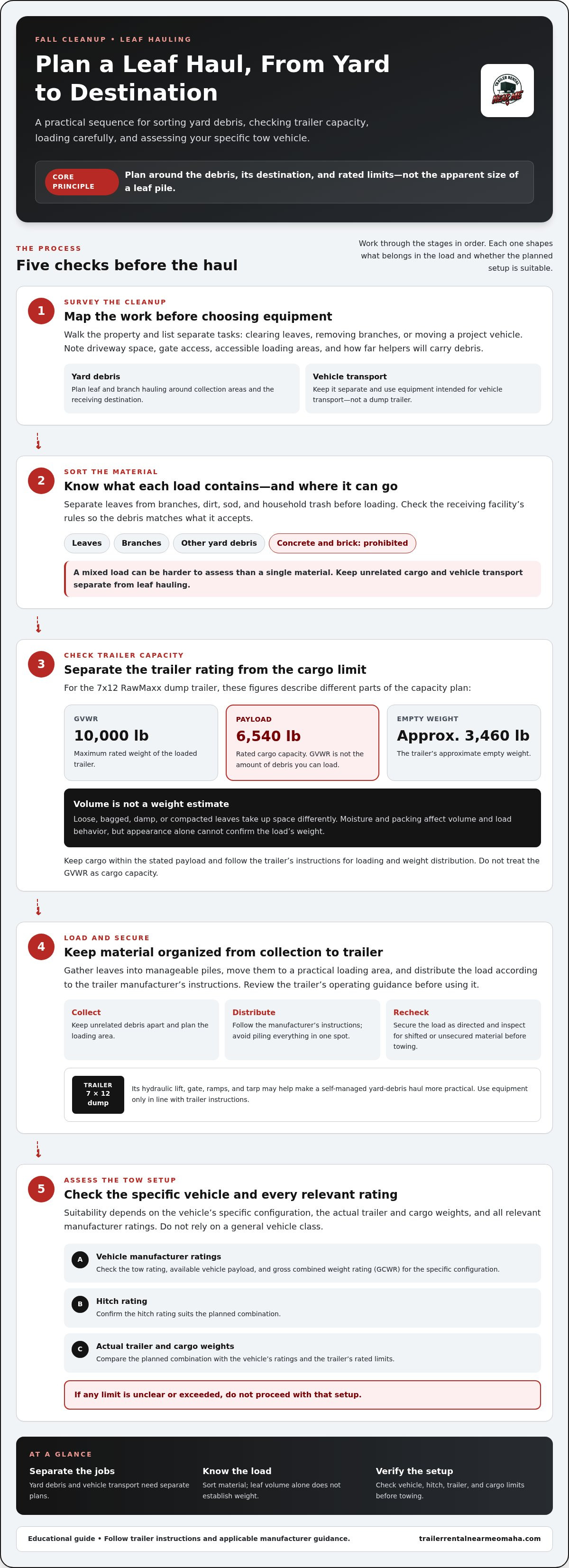
GVWR is the trailer’s maximum rated loaded weight. Payload is its rated cargo capacity. The 7x12 RawMaxx dump trailer has a 10,000-lb GVWR, a 6,540-lb payload, and an approximately 3,460-lb empty weight. These are different limits: GVWR is not the amount of debris you can load. The specifications also don’t provide a safe weight estimate for a pile of leaves. Keep cargo within the stated payload and follow the trailer’s instructions for loading and weight distribution.
Which fall-cleanup materials need separate planning?
Sort the load before it reaches the trailer. Leaves, branches, and other yard debris are distinct material categories, and a mixed load can be harder to assess than a single material. If you’re considering keeping some leaves on site, Penn State Extension’s Composting Leaves guidance describes another way to manage them. Concrete and brick are prohibited in dump trailers.
- Material: Identify each type of debris and keep incompatible materials out of the load.
- Collection: Note whether material is loose, bagged, damp, or packed together. These conditions affect planning but don’t establish weight.
- Distribution: Arrange the load according to the trailer manufacturer’s instructions rather than piling everything in one spot.
- Limits: Compare the cargo plan with the trailer’s payload. Assess towing suitability using the specific vehicle’s manufacturer ratings, payload, GCWR, and hitch rating.
Use these checks for an Omaha fall cleanup leaf trailer plan before loading, not after the trailer is full. If a dump trailer fits the debris and hauling plan, review the 7x12 dump trailer details. You can also compare the available trailer options for hauling projects to match equipment to the cleanup.
How to Load and Haul Fall Leaves Safely Around Omaha
A well-planned leaf haul keeps material organized from the yard to the trailer. Choose a clear collection point that’s practical to reach, then separate leaves from branches and other debris so the load matches your disposal plan. Before operating the trailer, review its instructions and applicable manufacturer guidance. For broader operating steps, use this dump trailer loading guide.
What is a practical leaf-hauling sequence?
Gather leaves into manageable piles, keeping unrelated debris apart. Move the material to the loading area, then load and distribute it according to the trailer’s operating guidance. Secure the load as directed, using the trailer’s equipment and instructions. Before towing, walk around the trailer and reassess the load. If anything has shifted or appears unsecured, address it before starting the trip.
What should you check before towing a loaded trailer?
Check the specific tow vehicle’s manufacturer ratings, not a general vehicle class. Compare its tow rating, available payload, and gross combined weight rating (GCWR) with the actual trailer and cargo weights. Include the hitch rating in the assessment. Suitability depends on the vehicle’s configuration and all relevant ratings, as well as the trailer and load. If any limit is unclear or exceeded, don’t proceed with that setup.
Use this quick pre-trip review:
- Vehicle: Check the manufacturer’s tow rating, payload, and GCWR for the specific configuration.
- Hitch: Confirm its rating suits the planned combination.
- Trailer and cargo: Account for the actual trailer weight and planned load. Keep cargo within the trailer’s rated limits.
- Load condition: Confirm debris is distributed and secured as directed, then reassess before moving.
An Omaha fall cleanup leaf trailer plan should account for the route, destination, and loaded combination. Follow the trailer’s instructions throughout loading and operation. Don’t assume a vehicle is suitable based on its class alone.
Plan an Omaha Fall Leaf Haul with a 7x12 Dump Trailer
A dump trailer can suit a self-managed cleanup when leaves and other acceptable yard debris need to be gathered across the property and hauled to a receiving facility. It provides one place to collect the material, but the project still depends on sorting debris, planning the destination, and staying within equipment limits. Check the facility’s current rules before loading so you know what it accepts and how material should be prepared.
What does the 7x12 dump trailer offer for yard-debris hauling?
The 7x12 RawMaxx dump trailer has a 10,000-lb GVWR, an approximately 3,460-lb empty weight, and a 6,540-lb payload. Use those stated ratings to plan the cargo rather than judging capacity by how full the trailer looks. Its features include a hydraulic scissor lift and spreader gate, along with ramps and a tarp. Follow the operating instructions for the trailer and its equipment. These features don’t change the rated limits.
Before choosing the setup, compare your vehicle’s specific tow rating, payload, GCWR, and hitch rating with the trailer and planned cargo weights. Vehicle class alone can’t establish towing suitability. Keep debris sorted, and don’t put concrete or brick in a dump trailer.
How can readers keep the project plan local and practical?
For homeowners in Omaha and nearby communities, confirm the destination before the haul. Facility rules can differ, and accepted materials may depend on how debris is sorted or contained. Check current guidance with the receiving facility, then stage only the materials it accepts. This helps prevent a trip with a load that can’t be unloaded as planned.
If a 7x12 dump trailer suits your cleanup, review the 7x12 dump trailer rental details as you finalize the project plan. Choose the hauling method based on your debris, access, destination, and the ratings of the full towing combination. A practical Omaha fall cleanup leaf trailer plan starts with those details, then matches the equipment to the work.
Set Up Your Cleanup for a Smooth Haul
Before cleanup day, turn the plan into a simple sequence. Choose an accessible collection area, decide how you’ll separate leaves from other yard debris, and identify the receiving facility. Set aside time for gathering, loading, and driving instead of treating the haul as an afterthought. Coordinating the work helps keep piles from spreading back across cleared spaces.
Use the Omaha fall cleanup leaf trailer plan as a project checklist, not just an equipment choice. If the debris, destination, access, and tow setup all line up, you can begin with fewer last-minute decisions. If they don’t, adjust the plan before loading.
Trailer Rental Near Me serves La Vista, Omaha, Bellevue, Papillion, Ralston, Council Bluffs, and Bennington. Book online to plan a flexible rental period for your cleanup. The Trailers You Wish Your Buddy Owned.
Frequently Asked Questions
Can I use a dump trailer to haul fall leaves?
Yes, a dump trailer can work for a suitable leaf and yard-debris project. Consider whether you can gather the material near the trailer, whether the loading area is accessible, and whether your disposal plan accepts the sorted debris. The 7x12 RawMaxx is one option. Its fit depends on the full project and towing setup, not simply how much space the leaves appear to occupy.
How much can the 7x12 RawMaxx dump trailer carry?
The 7x12 RawMaxx dump trailer has a 6,540-lb payload and a 10,000-lb GVWR. Before loading, compare the planned cargo with the stated payload and account for actual trailer and cargo weights in your towing assessment. Loose leaves can take up substantial space without revealing their weight, so appearance alone isn’t a reliable way to judge whether a load fits.
Can I put branches and other yard debris in a dump trailer with leaves?
Plan the mix before loading. Keep branches apart from loose leaves so you can inspect what’s going into the trailer and avoid combining materials intended for different destinations. Check the receiving facility’s current rules for each type of debris rather than assuming it accepts every material or combination. Concrete and brick are strictly prohibited in dump trailers and must be kept out of the load.
What should I check before towing a loaded dump trailer?
Confirm that the full loaded combination fits the specific vehicle’s ratings and the hitch’s rating. Use the vehicle manufacturer’s guidance for its exact configuration, and account for the trailer and cargo together. If you can’t establish that the setup stays within the applicable limits, don’t tow it in that configuration. Review the trailer’s operating instructions and reassess the load if its contents shift before departure.
Where can I take fall leaves and yard waste in Omaha?
Choose a receiving facility only after checking its current official instructions. Accepted materials, preparation directions, and operating details can vary or change, so confirm them before loading and traveling. If your cleanup includes leaves, branches, or bagged material, check each type against the facility’s guidance rather than assuming one rule covers the whole load. This helps you plan around the debris you actually collected.

Article by
Chuck Crom
Chuck Crom is the owner of Trailer Rental Near Me, serving Omaha, La Vista, Papillion, Bellevue, Gretna, Elkhorn, and the surrounding Nebraska and western Iowa communities. With years of hands-on experience towing, hauling, and helping customers choose the right trailer for the job, Chuck specializes in making trailer rentals simple, safe, and stress-free.
He writes practical, no-nonsense articles covering trailer safety, towing tips, weight ratings, loading techniques, equipment transport, landscaping projects, home renovations, vehicle hauling, and everything in between. His goal is to help renters avoid common mistakes, stay safe on the road, and get their projects done with confidence.
When he's not helping customers or creating educational content, Chuck is focused on growing a locally owned business built on honest advice, quality equipment, and exceptional customer service.


