
What if you could move that dead project car across the metro without the high cost of a professional tow or the danger of steep, shaky ramps? Loading an inoperable vehicle is often the most frustrating part of a restoration or a move. It's common to feel overwhelmed by trailer capacities or the fear of damaging your frame during the pull. This How to Transport a Non-Running Car in Omaha: Trailer & Winch Guide provides a clear, professional plan for a safe DIY haul. We'll show you how to master the logistics of moving inoperable vehicles across Omaha, La Vista, and Bellevue using the right heavy-duty equipment.
You'll learn why a 22'x102 14k tilt deck trailer is a superior "no-ramp" solution compared to traditional setups, especially for low-clearance vehicles. We also explain why a 12,000lb winch is essential for single-person loading and how to stay compliant with Nebraska DMV requirements for trailers over 3,000 pounds. From securing your load in Papillion to navigating the legal thresholds for safety chains and brakes, this guide ensures your vehicle reaches its destination safely. It's about having the right tools and a solid plan to get the job done right.
Key Takeaways
- Discover why a 22'x102 14k tilt deck provides a safer loading angle for low-profile cars than traditional ramps.
- Learn how a 12,000lb winch simplifies single-person loading for vehicles that don't steer or roll properly.
- This How to Transport a Non-Running Car in Omaha: Trailer & Winch Guide details essential Nebraska and Iowa towing laws, including brake requirements for 14k GVWR trailers.
- Master a professional step-by-step loading sequence to protect your vehicle's frame and ensure a secure haul across the Omaha metro.
- Find out how to access professional-grade trailers and tie-downs in La Vista for your next automotive project.
The Logistics of Moving an Inoperable Vehicle in Omaha
Moving a car that doesn't start is a different challenge than a standard haul. Whether it's a classic project car in Bennington or a salvage pick-up in Council Bluffs, you need a specific plan. This How to Transport a Non-Running Car in Omaha: Trailer & Winch Guide highlights the mechanical reality of dead weight. "Non-running" is a broad term. It might mean a simple dead battery, or it could mean seized brakes and a locked transmission. Understanding exactly how your vehicle is "dead" determines the equipment you need to rent.
Assessing Your Vehicle's Condition
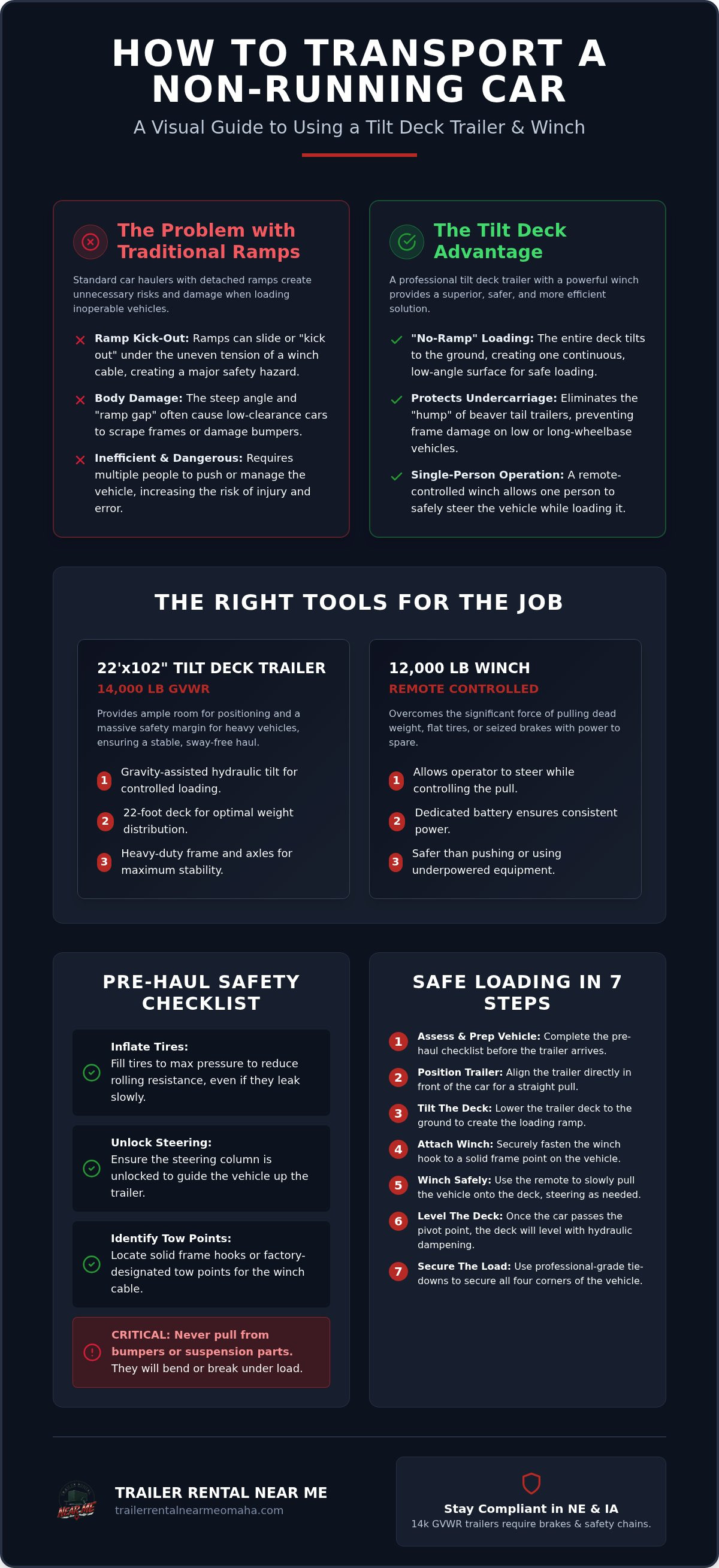
Before the trailer arrives, check the basics. Inflate the tires to their maximum pressure. Even if they don't hold air for long, full tires reduce friction during the pull. Ensure the steering column is unlocked. If you can't steer the vehicle, you can't line up the winch pull. Identify solid frame hooks or factory tow points. Never pull from a bumper or a suspension arm. These parts aren't designed for the tension of a 12,000lb winch and will likely bend or break during the loading process.
Why Traditional Ramps Fail for Non-Runners
Standard car haulers often use heavy, detached steel ramps. These work for cars that drive up under their own power. For non-runners, they are a safety risk. Ramps can "kick out" or slide if the winch cable puts uneven tension on the vehicle. There is also the "ramp gap" where the tires transition from the ground to the ramp. For a lowered sports car or a vehicle with a long front overhang, this gap often causes body damage. A 22'x102 14k tilt deck car trailer solves this by bringing the entire deck to the ground, creating a single, continuous plane for loading.
While there are many types of tow trucks available across the Omaha metro, hiring a professional service for a project car often involves long wait times and high rates. Renting professional equipment from Trailer Rental Near Me gives you total control over the schedule. You can take the time to load safely in a tight driveway in Papillion or a rural lot in Ralston without a tow driver's clock ticking. It's a more practical, cost-effective solution for anyone comfortable with a hitch and a winch.
Why a Tilt Deck Trailer with a Winch is the Superior Choice
Many people try to push a non-runner onto a trailer using brute force. It's dangerous and inefficient. This How to Transport a Non-Running Car in Omaha: Trailer & Winch Guide focuses on using the right tool for the job. A 22'x102 14k Tilt Deck eliminates the need for manual labor. The gravity-assisted deck creates a low load angle that protects the vehicle's undercarriage. With a 22-foot deck, you have ample room to adjust the car's position for perfect weight distribution. This prevents dangerous trailer sway during your trip through Elkhorn or Gretna. The 14k GVWR rating ensures the trailer stays stable, even when hauling heavy trucks or full-sized SUVs.
The 12,000lb Winch Advantage
A 12,000lb winch is the industry standard for a reason. While a car might only weigh 4,000 lbs, the force required to pull dead weight up an incline is much higher. Rolling resistance from flat tires or seized bearings adds significant strain. A 12k winch handles this load with power to spare. These units come with dedicated batteries and remote controls. This setup allows a single operator to steer the vehicle while controlling the pull from a safe distance. You can find more technical details in this Car Trailer Rental Omaha guide.
Tilt Deck vs. Beaver Tail: A Comparison
Traditional "beaver tail" trailers have a fixed slope at the rear. This creates a "hump" where the deck meets the tail. For lowered cars or long-wheelbase vehicles, this hump often causes the frame to bottom out. A tilt deck removes this obstacle. The entire platform pivots, creating a straight line from the pavement to the front of the trailer. It's a lifesaver in tight Omaha residential streets where you don't have 10 feet of extra space for ramps. The hydraulic dampening system ensures the deck settles slowly once the car's weight passes the pivot point. It's a smooth, controlled transition that protects your investment.
Using a 14k GVWR trailer provides a massive safety margin for your haul. It's built to handle demanding tasks without stressing the axles or frame. If you're moving a heavy project from Papillion to Bellevue, you want that peace of mind. Check our available car haulers to see the specific equipment ready for your next recovery.
Essential Safety and Legal Requirements for Omaha Hauls
Safety on the road starts with legal compliance. In both Nebraska and Iowa, any trailer with a Gross Vehicle Weight Rating (GVWR) over 3,000 pounds must have its own braking system. Because a professional 14k tilt deck far exceeds this limit, your tow vehicle must have a functional brake controller. This equipment is vital for maintaining control on the Kennedy Freeway or during sudden stops on I-680. Nebraska law also mandates that you use two safety chains or cables when towing on the highway. These serve as a critical backup if the primary hitch fails. Following this How to Transport a Non-Running Car in Omaha: Trailer & Winch Guide ensures you stay on the right side of the law while protecting your cargo.
Towing Capacity and Tongue Weight
You must know your truck's limits before hooking up. Total weight includes the 22ft trailer plus the weight of the non-running vehicle. A 14,000 lb capacity trailer requires a Class IV or Class V hitch. Most standard half-ton pickups cannot safely manage a fully loaded 14k trailer. Check your vehicle's Gross Combination Weight Rating (GCWR) inside the driver-side door jamb. In Nebraska and Iowa, you need a Commercial Driver's License (CDL) if your combined weight exceeds 26,000 lbs and the trailer is rated over 10,000 lbs. Always aim for 10% to 15% of the total weight on the tongue. Proper weight distribution prevents dangerous trailer sway at highway speeds.
Securing the Load: Tie-Down Best Practices
The FMCSA requires a 4-point tie-down method for all vehicle transports. This means securing each corner of the car independently to the trailer deck. Use the heavy-duty D-rings built into the 22'x102 deck for the most secure connection. Don't hook your straps to suspension parts like A-arms or axles. These components can shift or bend under the pressure of a ratchet strap, especially on older project cars. Instead, find solid frame points or use over-the-wheel straps. Check your straps after the first five miles of driving. Vibrations from Omaha's city streets can cause straps to settle or loosen.
Insurance is another practical consideration. Most personal auto policies provide liability coverage for a towed trailer but often exclude physical damage to the rental unit or the vehicle being hauled. Verify your coverage with your agent before picking up your equipment in La Vista. If you have questions about specific hardware requirements, view our trailer specifications to ensure your tow vehicle is properly equipped for the task.
Step-by-Step Guide: Loading a Non-Running Car Safely
Loading a non-runner requires a controlled environment and a steady hand. Level ground is non-negotiable. Park the tow vehicle and the 22'x102 14k Tilt Deck on flat pavement or hard-packed gravel. Avoid soft dirt or steep inclines that can cause the trailer to shift under the weight of a dead load. This How to Transport a Non-Running Car in Omaha: Trailer & Winch Guide emphasizes the importance of the setup. Once positioned, release the hydraulic tilt mechanism. The deck will pivot slowly to the ground, creating a continuous ramp for the vehicle. This eliminates the "kick-out" risk associated with traditional detached ramps.
Winching Procedures and Safety
Inspect the 12,000lb winch cable before every pull. Look for frays, kinks, or broken steel strands. If the cable is damaged, do not use it. Attach the winch hook to a verified frame point or a dedicated tow eye. Never hook to a steering rack or a thin suspension arm. Establish a clear "danger zone" before you start the motor. Nobody should stand within a radius equal to 1.5 times the length of the cable being used. If the vehicle has locked wheels or seized brakes, use a snatch block. This pulley system doubles the pulling power of the winch and reduces the mechanical strain on the motor. Have a partner sit in the driver's seat to steer the vehicle and manage the parking brake once the car is in position. Constant communication between the operator and the steering partner is essential for a straight, safe pull.
Final Checklist Before Departure
Once the car's center of gravity passes the pivot point, the deck will level out. Engage the hydraulic locks immediately to secure the platform. This prevents the deck from shifting while you're navigating I-680 or city streets in Papillion. Secure the car using the 4-point tie-down method on the heavy-duty D-rings. Don't forget to check the winch cable tension; it should be snug but not the primary means of securing the vehicle. Before you pull out, verify that the safety chains are crossed and the trailer lights are fully functional. Omaha's road vibrations can settle a load quickly. Plan to stop after the first five miles to re-tension your straps and ensure nothing has shifted during the initial miles of the haul.
Renting the Right Car Hauler in the Omaha Metro Area
Renting the right equipment is the final piece of the puzzle. For those in La Vista and Papillion, Trailer Rental Near Me provides a dependable local option for heavy-duty hauling. We focus on providing well-maintained tools that are ready to work when you are. This How to Transport a Non-Running Car in Omaha: Trailer & Winch Guide has covered the technical side of loading and safety. Now, you need the physical hardware to execute your plan. Our 22'x102 14k Tilt Deck Car Hauler is specifically outfitted for these demanding tasks. Unlike generic rental yards, we include a 12,000lb winch and all necessary tie-downs at no extra cost. It's a turn-key experience designed to save you time and money. You won't have to hunt for straps or wonder if your winch is strong enough for the pull.
Local Service Areas: From Elkhorn to Council Bluffs
Our pickup location in La Vista is centrally located to serve the entire metro area. Whether you're picking up a classic in Elkhorn or dropping off a salvage project in Council Bluffs, we're a quick drive away. We understand the needs of local car clubs and restoration enthusiasts who need reliable equipment for weekend builds. You don't have to deal with the uncertainty of a shipping marketplace when you can handle the move yourself. It's often more practical to rent for a day than to wait for a tow truck to show up on their schedule. View our current Trailer Inventory to see the specific units available for your next project. We take pride in being a locally owned business that supports the Omaha automotive community.
Booking Your 14k Tilt Deck Rental
We've streamlined the booking process for 2026 reservations. You can check availability and secure your dates online with just a few clicks. We offer flexible rental periods to accommodate everything from a quick shop transfer to a full weekend of moving multiple vehicles. This flexibility is perfect for project cars that don't always follow a strict timeline. When you arrive for pickup, please have a valid ID and proof of insurance ready. You also need a tow vehicle equipped with a Class IV or V hitch and a functional brake controller. We'll walk you through the tilt mechanism and winch operation to ensure you're comfortable before you leave the lot. It's about providing the peace of mind that comes with using professional-grade gear.
Master Your Next Vehicle Recovery in Omaha
Transporting an inoperable vehicle doesn't have to be a high-stress event. By choosing a 22ft tilt deck, you eliminate the risks associated with loose ramps and steep loading angles. The inclusion of a 12,000lb heavy-duty winch ensures you have the mechanical advantage needed to pull dead weight safely. This How to Transport a Non-Running Car in Omaha: Trailer & Winch Guide has provided the roadmap for a successful DIY haul from Papillion to Bellevue. You now have the knowledge to navigate Nebraska's legal requirements and the step-by-step process for secure winching.
Using professional-grade equipment from a locally owned business in La Vista gives you the tools to finish your project without damaging your car or your budget. It's about having the right gear to handle the job with confidence.
Contact Trailer Rental Near Me for any questions or to secure your reservations for your next automotive project.
Frequently Asked Questions
Can I load a car with locked wheels onto a tilt deck trailer?
Yes, you can load a vehicle with locked wheels, but it requires specific techniques. Use a snatch block to double the pulling power of the 12,000lb winch. This setup reduces mechanical strain on the winch motor. You might also use wheel dollies or "skates" to help the tires slide across the steel deck. Always ensure the trailer is tilted fully to provide the shallowest angle possible for the recovery.
Is a winch included with the car trailer rental in Omaha?
Yes, a heavy-duty 12,000lb winch is included with our car trailers. We also provide the necessary tie-downs at no extra cost. This turn-key setup is designed for moving inoperable vehicles across the metro. It's a key part of our How to Transport a Non-Running Car in Omaha: Trailer & Winch Guide for a safe DIY move. You won't need to bring your own recovery gear.
What size hitch ball do I need for a 14k car hauler rental?
You need a 2-5/16 inch hitch ball for a 14,000lb GVWR trailer. A standard 2-inch ball is not rated for this weight and creates a major safety risk. Ensure your ball mount and hitch receiver are also Class IV or Class V rated. This hardware is necessary to handle the combined weight of the heavy-duty tilt deck and your vehicle safely without equipment failure.
Do I need a special license to tow a 14,000lb trailer in Nebraska?
Most drivers don't need a Commercial Driver's License (CDL) for personal vehicle transport in Nebraska. A CDL is only required if your Gross Combination Weight Rating (GCWR) exceeds 26,001 pounds and the trailer is over 10,000 pounds. For a typical pickup truck and car hauler setup, a standard Class O license is sufficient. Always verify your specific truck's towing capacity and GCWR before booking your rental.
How do I secure a non-running car that has no tow hooks?
Use over-the-wheel straps or secure the car using solid frame points. Never use suspension components like A-arms or axles as they can bend under tension. If the vehicle lacks factory tow eyes, look for "T-slots" in the frame designed for transport. Our provided tie-downs work with the heavy-duty D-rings on the deck to ensure a 4-point securement that meets FMCSA standards for safe transport.
Can I rent a car hauler for a single day in La Vista?
Yes, we offer flexible rental periods including single-day options at our La Vista location. This is ideal for quick shop transfers or local recoveries in Papillion and Bellevue. You can book your rental online to ensure the 22ft tilt deck is ready when you arrive. We prioritize your time and focus on providing well-maintained equipment for both short-term logistical needs and longer projects.
What happens if the winch cable breaks during loading?
If a cable breaks, the "danger zone" protocol protects you from injury. This is why nobody should stand near the cable during a pull. To prevent vehicle roll-back, keep the safety chains loosely attached or have a partner manage the parking brake from the driver's seat. Inspecting the cable for frays or kinks before use is the best way to avoid this scenario entirely during loading.
Is it safe to tow a non-running car across state lines to Council Bluffs?
Yes, it is safe and legal to tow between Omaha and Council Bluffs. Both Nebraska and Iowa require functional trailer brakes for units over 3,000 pounds. Our 14k trailers meet all legal standards for interstate travel. This How to Transport a Non-Running Car in Omaha: Trailer & Winch Guide ensures you stay compliant while crossing state lines. Just verify your safety chains are crossed and your brake controller is functional.

Article by
Chuck Crom
Chuck Crom is the owner of Trailer Rental Near Me, serving Omaha, La Vista, Papillion, Bellevue, Gretna, Elkhorn, and the surrounding Nebraska and western Iowa communities. With years of hands-on experience towing, hauling, and helping customers choose the right trailer for the job, Chuck specializes in making trailer rentals simple, safe, and stress-free.
He writes practical, no-nonsense articles covering trailer safety, towing tips, weight ratings, loading techniques, equipment transport, landscaping projects, home renovations, vehicle hauling, and everything in between. His goal is to help renters avoid common mistakes, stay safe on the road, and get their projects done with confidence.
When he's not helping customers or creating educational content, Chuck is focused on growing a locally owned business built on honest advice, quality equipment, and exceptional customer service.


