
What if the straps holding your car down are attached to parts that move? If you’re asking, “How Do You Secure a Car to a Trailer?”, start before tightening a single ratchet. Position the vehicle carefully, choose suitable anchor points, and use a tie-down method that keeps the car secure without risking damage.
It’s reasonable to worry about straps loosening, the car shifting in transit, or pressure on the suspension and frame. A clear, repeatable process helps you check each part of the setup. This guide explains how to position a vehicle, select tie-down equipment, secure all four corners, and inspect the load before departure and at stops. It also covers key considerations for hauling around Omaha and nearby communities.
From checking working load limits to using a winch properly, these steps can help you prepare a stable load. The goal is to limit movement, reduce the risk of vehicle damage, and travel more safely.
Key Takeaways
- How Do You Secure a Car to a Trailer? Position the car for balanced loading, choose suitable anchor points, and use a four-point tie-down method.
- Check each strap’s working load limit (WLL) tag and select equipment that suits the vehicle and securement setup.
- Use appropriate frame points or axle straps. Don’t attach tie-downs directly to suspension components unless the vehicle or tie-down maker identifies them as suitable.
- Apply opposing tension across the vehicle’s corners to help limit movement during transport.
- Recheck strap tension shortly after departure and at safe stops because straps can settle during a trip.
Essential Gear for Vehicle Tie-Downs
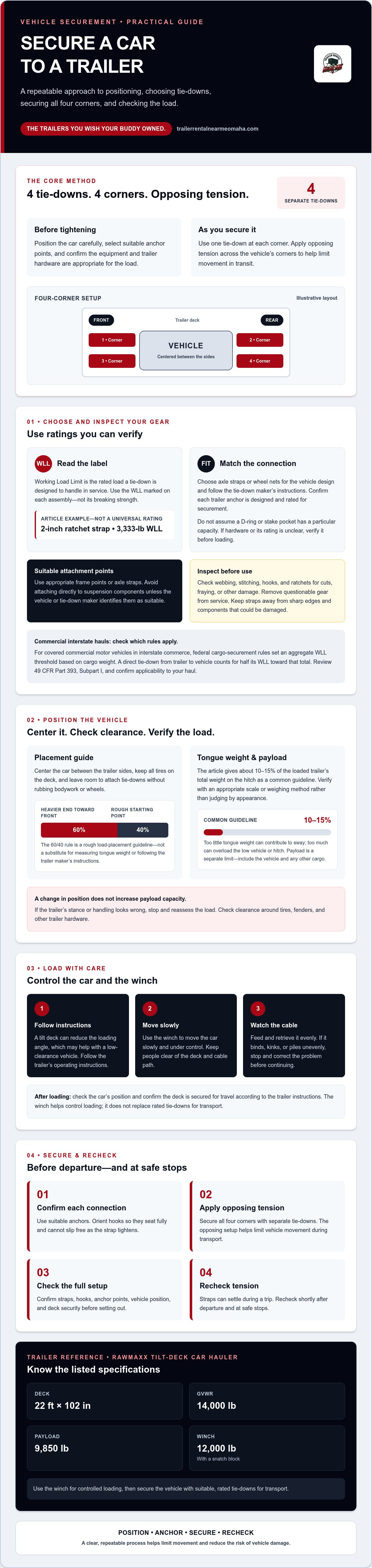
How Do You Secure a Car to a Trailer? Start with tie-downs and trailer anchor points suited to the vehicle and load. Check the rating labels and equipment instructions before use. A 2-inch ratchet strap with a 3,333-lb Working Load Limit (WLL) is an example, not a rating to assume for every strap. Read the WLL marked on each assembly and confirm that the anchor points are appropriate for the load.
Understanding Strap Ratings and WLL
WLL is the rated load a tie-down is designed to handle in service. Breaking strength is the force at which it may fail, so it isn’t the rating to use when assessing a securement setup. Under federal rules for commercial motor vehicles in interstate commerce, the aggregate WLL must meet the applicable threshold based on cargo weight. A direct tie-down from the trailer to the vehicle counts for half its WLL toward that total. Review the FMCSA cargo securement regulations in 49 CFR Part 393, Subpart I, and confirm which rules apply to your haul. Unmarked utility straps don’t provide a verifiable WLL for evaluating the setup.
Choose axle straps or wheel nets based on the vehicle’s design and the tie-down maker’s instructions. Use suitable attachment points, and keep straps away from sharp edges and components that could be damaged. Before use, inspect webbing, stitching, hooks, and ratchets for cuts, fraying, or other damage. Remove questionable gear from service.
Trailer Hardware: D-Rings and Stake Pockets
Check that each trailer anchor point is designed for securement and suitable for the connection. Don’t assume a D-ring or stake pocket has a particular capacity without checking its rating. Orient hooks so they seat fully and cannot slip free as the strap tightens. If the trailer hardware or its rating is unclear, stop and verify it before loading.
The RawMaxx tilt-deck car hauler has a 22 ft x 102 in deck, a 14,000-lb GVWR, a 9,850-lb payload, and a 12,000-lb winch with a snatch block. The winch helps control loading, but it doesn’t replace rated tie-downs for transport. Tie-downs are included with the Omaha tilt-deck car hauler.
Positioning the Vehicle for Optimal Weight Distribution
Where the car sits affects how the loaded trailer responds on the road. Center it between the sides, then place its heavier end toward the front as a starting point. The 60/40 rule is a rough guideline for load placement, not a substitute for measuring tongue weight or following the trailer maker’s instructions. The FMCSA cargo securement regulations address securement performance for covered commercial vehicles, but don’t prescribe this positioning rule for every private haul.
A 102-inch deck provides working width, but check clearance around the tires, fenders, and other trailer hardware. Centering the car helps avoid uneven side-to-side loading. Keep all tires on the deck and leave room to attach tie-downs without rubbing the bodywork or wheels.
Check Tongue Weight and Payload
A common guideline is to place about 10–15% of the loaded trailer’s total weight on the hitch. Verify tongue weight with an appropriate scale or weighing method rather than judging by appearance. Too little weight at the tongue can contribute to sway. Too much can overload the tow vehicle or hitch and cause rear-end squat. If the trailer’s stance or handling looks wrong, stop and reassess the load.
Payload is a separate limit from tongue weight. Include the vehicle and any other cargo when checking the trailer’s stated capacity. Shifting the car can change weight distribution, but it doesn’t increase the trailer’s payload rating.
Load with a Tilt Deck and Winch
A tilt deck can reduce the loading angle, which may help with a low-clearance vehicle. Follow the trailer’s operating instructions and use the winch to move the car slowly and under control. Keep people clear of the deck and cable path. Feed and retrieve the cable evenly. If it binds, kinks, or piles unevenly, stop and correct the problem before continuing.
After loading, check the car’s position and confirm the deck is secured for travel according to the trailer instructions. Then use the four-point tie-down method described below.
The 4-Point Tie-Down Method Step-by-Step
When you need to transport a vehicle safely across Omaha, mastering the proper securing technique is essential. At Trailer Rental Near Me, we recommend using a reliable four-point system to ensure your car remains completely stable throughout the journey. This proven method prevents shifting, protects your vehicle's suspension, and provides maximum security on the road. Follow these clear steps to properly anchor your car using professional-grade straps and secure anchor points.
How Do You Secure a Car to a Trailer? Use a Four-Point Method
Use four separate tie-downs, one at each corner, attached to suitable vehicle and trailer anchor points. Secure the front first, then the rear. Keep each strap clear of sharp edges, brake and fuel lines, wiring, and hot exhaust parts. The aim is to restrain the vehicle without relying on components that can move or be damaged.
Choose Safe Vehicle Anchor Points
Use manufacturer-approved frame points or properly fitted axle straps. Don’t attach straps directly to control arms or other suspension parts unless the vehicle or tie-down maker specifically identifies them as suitable. Keep straps away from brake lines, fuel lines, and electrical harnesses. Wheel bonnets or nets can be an option when the vehicle’s wheels are intended securement points, especially if you want to keep straps off delicate rims. Follow the net maker’s instructions.
Secure and Tension Each Corner
- Attach the front straps to approved points and trailer anchors. Tighten each enough to remove slack while keeping the vehicle stable and the strap aligned.
- Fit the rear straps to approved points. Angle them to create opposing restraint and help limit forward, backward, and side-to-side movement.
- Use a cross-pattern only when the strap path and anchor locations allow it without rubbing tires, bodywork, or other components. Opposing strap directions can help resist movement, but crossing straps isn’t a substitute for proper anchor points.
- Recheck all four straps for secure hooks, twists, and slack. Don’t overtighten to the point of stressing the vehicle or excessively compressing its suspension. There isn’t one tension setting for every car and restraint system, so follow the equipment maker’s guidance.
To operate a ratchet, feed the webbing through the mandrel slot and take up slack before ratcheting. The amount of webbing on the mandrel depends on the ratchet design, so follow its instructions instead of relying on a universal “three-wrap” rule. Tie off excess strap securely, away from tires, moving parts, and exhaust heat.
For a vehicle-hauling setup with included tie-downs, review the tilt-deck car hauler details.
Post-Loading Safety and Omaha Transit Tips
Before leaving, walk around the trailer. Confirm each tie-down is seated, secured, and free of visible damage. Follow the trailer and winch instructions to stow the cable and controls safely, and make sure the tilt deck is locked for travel. Check trailer tire pressure against the manufacturer’s specifications, and confirm the drive-over fenders are clear of the vehicle and anything that could shift.
Make an early “Mile One” check. After traveling a short distance, pull over somewhere safe and recheck strap tension. Straps can settle after loading. Repeat the inspection at stops, looking for signs of shifting, loosened hardware, or contact between straps and the vehicle. Rain, road spray, or icy conditions can affect what you encounter on the route. Take extra care during checks, and don’t handle damaged or unsafe equipment.
Monitor the Load and Route
Use your mirrors to keep an eye on the trailer while driving near Omaha, including on I-80 and local interchanges. If you notice movement or an unusual change in handling, find a safe place to stop and inspect the setup. Don’t reach for straps or adjust the load while the vehicle is moving.
Whether you’re hauling in Nebraska or between La Vista, Omaha, Bellevue, Papillion, Ralston, Council Bluffs, and Bennington, securement is only part of the plan. Check your tow vehicle’s owner’s manual and manufacturer ratings for tow capacity, payload, gross combined weight rating (GCWR), and hitch limits. Confirm those figures work with the specific trailer, car, and other cargo. A vehicle’s class, such as half-ton or three-quarter ton, doesn’t establish whether a particular configuration is suitable.
Final Checks Before the Trip
- Confirm the winch and cable are stowed as directed by the manufacturer.
- Verify the tilt deck is locked and trailer tires are set to the specified pressure.
- Recheck tie-downs and load position at a safe stop shortly after departure and during the trip.
- Review the complete combination against the tow vehicle and trailer manufacturers’ ratings.
For a car move, see the 22-foot tilt-deck car trailer rental details.
Haul With a Secure, Checked Setup
How Do You Secure a Car to a Trailer? Use compatible, rated tie-down gear, position the vehicle for balanced loading, and secure all four corners to suitable anchor points. Inspect the setup before departure, then stop shortly after starting to check for loosened straps or shifting. Continue checking at safe stops along the route.
The right equipment supports a careful loading process. The 22-foot RawMaxx tilt-deck car hauler has a 12,000-lb winch and a 9,850-lb payload capacity. Confirm that your vehicle and cargo fit the trailer’s ratings, and check your tow vehicle manufacturer’s ratings for the full combination. A deliberate walk-around and tension check help you identify issues before continuing.
Take your time, follow the equipment instructions, and check each tie-down. A well-prepared haul starts with the decisions you make before pulling onto the road.
Frequently Asked Questions
Should I cross my tie-down straps when securing a car?
Cross straps only if their routing creates useful opposing restraint without rubbing against the vehicle or trailer. A crossed layout isn’t automatically better. It can create poor angles or contact points if the anchors aren’t positioned for it. Check the strap maker’s instructions and the car hauler’s setup guidance. The finished arrangement should keep straps clear of tires, bodywork, sharp edges, and heat sources.
Is it better to tie down a car by the frame or the wheels?
Either approach can work when the vehicle and securement equipment are designed for it. Frame or axle securement depends on having suitable, approved attachment points. Wheel nets need to fit and be rated for the wheel and load. Consult the vehicle and tie-down manufacturers’ instructions before choosing. If an attachment point’s purpose or capacity is unclear, don’t use it as an anchor.
How many straps do I need to legally secure a vehicle on a trailer?
There isn’t one legal strap count for every vehicle and trip. Federal cargo-securement rules for covered commercial motor vehicles depend on the load and circumstances. For automobiles, light trucks, and vans within the regulation’s scope, review 49 CFR § 393.128 and the applicable general requirements in Subpart I. Private and intrastate trips may involve different rules, so check the requirements for your specific haul.
Should the car be in park or neutral while on the trailer?
Use the vehicle maker’s transport instructions rather than assuming one gear applies to every car. The correct procedure can depend on the transmission, drivetrain, and parking-brake design. Some vehicles require specific steps to avoid drivetrain damage during transport. Before loading, consult the owner’s manual for trailer or flat-towing guidance. Whatever gear the maker prescribes, the car still needs an independent, properly installed securement system.
Can I use the winch as a primary tie-down point during transport?
No. A winch assists with loading. Don’t treat its cable as the vehicle’s primary travel restraint. Secure the vehicle with a separate tie-down arrangement intended for transport, and follow the winch and trailer manufacturers’ instructions for stowing the cable. The fact that the winch held the car during loading doesn’t replace checking the tie-down assembly, attachment points, and load ratings.
How often should I stop to check the straps during a long haul?
Make an early check after setting off, then inspect the securement whenever you stop safely. Look for changes in strap tension, vehicle movement, or signs of rubbing and wear. If rain, road spray, or rough conditions affect the equipment, find a safe place to reassess before continuing. Choose pull-off locations where you can inspect the trailer away from traffic, and never adjust the load while driving.
Need a car-hauling trailer in La Vista, Omaha, Bellevue, Papillion, Ralston, Council Bluffs, or Bennington? Review the tilt-deck car hauler details and book online.

Article by
Chuck Crom
Chuck Crom is the owner of Trailer Rental Near Me, serving Omaha, La Vista, Papillion, Bellevue, Gretna, Elkhorn, and the surrounding Nebraska and western Iowa communities. With years of hands-on experience towing, hauling, and helping customers choose the right trailer for the job, Chuck specializes in making trailer rentals simple, safe, and stress-free.
He writes practical, no-nonsense articles covering trailer safety, towing tips, weight ratings, loading techniques, equipment transport, landscaping projects, home renovations, vehicle hauling, and everything in between. His goal is to help renters avoid common mistakes, stay safe on the road, and get their projects done with confidence.
When he's not helping customers or creating educational content, Chuck is focused on growing a locally owned business built on honest advice, quality equipment, and exceptional customer service.


