
A commercial property cleanup trailer in La Vista can help move debris and unwanted materials away from a business site during a cleanout or renovation. The trailer handles hauling; sorting, loading, and final site cleanup are separate parts of the job. Planning each step helps keep the work area organized and ready for its next use.
Commercial cleanouts often involve more than clearing a room. Property managers, realtors, landlords, and contractors may need to coordinate bulky items, renovation debris, and access around active sites. This guide covers planning the haul, sorting materials, and finishing the site after the load leaves. It also explains when a dump trailer may suit the project and how to assess the materials being moved at a La Vista property.
Key Takeaways
- Sort materials before loading and keep prohibited items, including concrete and brick, out of dump trailers.
- Plan the cleanup sequence so debris removal, site access, and the final sweep work together.
- Reduce safety and liability risks by managing load distribution, securement, and movement around the work area.
- Match the trailer to the material and hauling task, then assess the full tow setup before moving a loaded trailer.
- Learn which trailer options can support cleanouts, vehicle transport, or general project hauling in La Vista.
What debris can and cannot go in a commercial cleanup trailer in Nebraska?
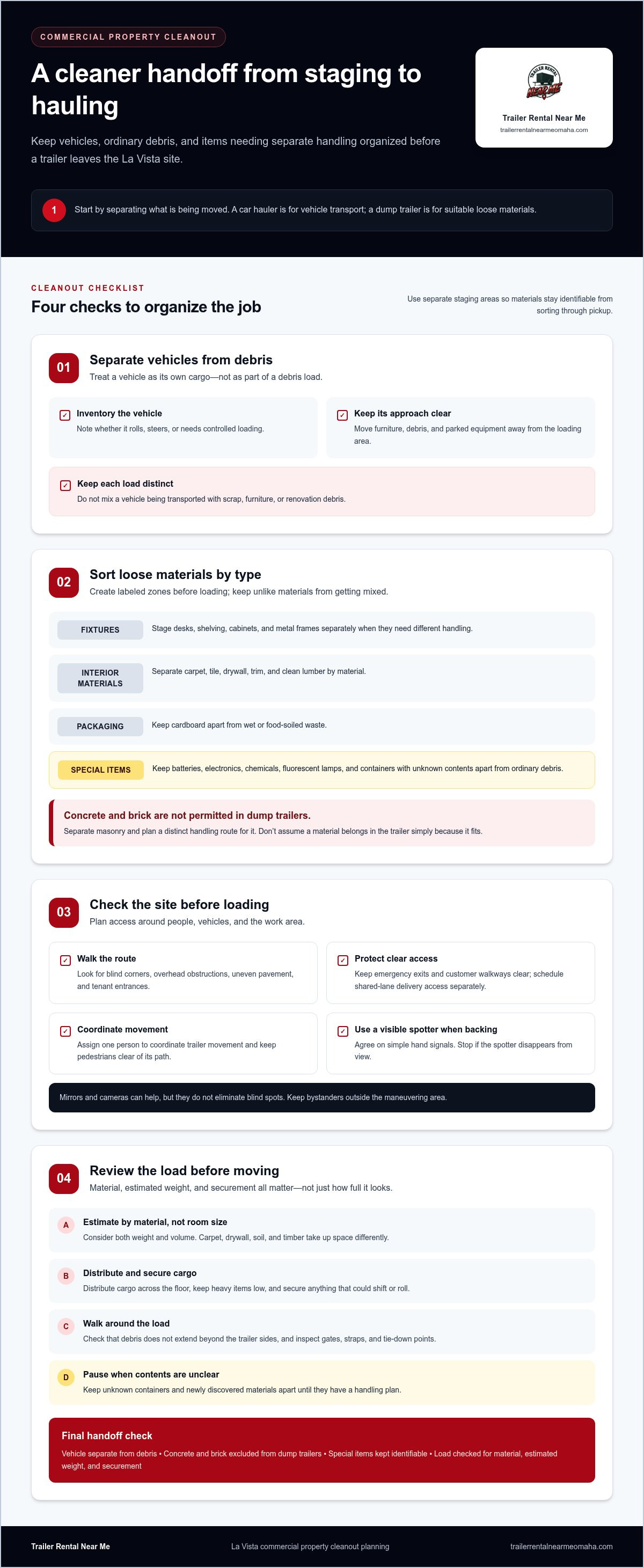
Separate vehicle transport from debris hauling at the start of a commercial cleanout. A dealership, office, or rental property may need to move an unwanted vehicle while clearing boxes, fixtures, and renovation waste. Treat the vehicle as separate cargo, not as debris for a dump trailer. Identify what must be moved intact, then stage it away from loose materials.
That distinction matters when a parked vehicle blocks work at a La Vista property. A car hauler is designed to transport vehicles; a dump trailer carries suitable loose materials. Don’t mix scrap, furniture, or renovation debris with a vehicle being transported. Make a separate inventory for each load, noting whether the vehicle rolls, steers, or needs controlled loading. These details shape the equipment and loading plan.
For a material cleanout, sort waste by type and condition before loading. A retail refresh might generate shelving, cardboard, carpet, clean wood, and packaging. An office turnover could leave desks, cabinets, and flooring. Keep items requiring separate handling apart from ordinary debris. Don’t bury paint, solvents, fuels, batteries, fluorescent lamps, or electronics under mixed construction waste.
Concrete and brick are not permitted in dump trailers. Keep out chunks from a broken walkway, masonry wall, or brick feature. Don’t assume a material belongs in the trailer simply because it fits. Separate dense masonry from the cleanout and plan a distinct handling route for it.
Use separate staging areas to keep categories from getting mixed:
- Vehicles: Record condition and access needs, then keep the vehicle clear of debris piles.
- Fixtures: Stage desks, shelving, cabinets, and metal frames separately when they need different handling.
- Interior materials: Separate carpet, tiles, drywall, trim, and clean lumber by material.
- Packaging: Keep cardboard apart from wet or food-soiled waste.
- Special items: Isolate batteries, electronics, chemicals, and containers with unknown contents.
Plan loading differently for vehicles and loose materials. For vehicle transport, note the approach path and clear furniture, debris, and parked equipment from the loading area. For a debris load, estimate weight and volume based on material type, not just room size. Carpet, drywall, soil, and timber take up space differently. A full-looking load doesn’t prove it is within the trailer’s capacity.
La Vista’s local setting includes a mix of retail, office, rental, and construction properties, each with different cleanout needs. Population estimates for July 1, 2025, (V2025) were 16,543 people, according to the City of La Vista. A tenant turnover may involve furniture and packaging, while a storefront renovation could add flooring and trim. A vehicle occupying a service area creates a different hauling task than either pile.
Before loading, walk the site and label each staging zone. Ask the crew to identify unknown containers before moving them. Don’t guess at contents or combine unidentified items with ordinary waste. For suitable loose debris, the dump trailer hauling option can fit a project where loading and material type align.
Before hauling, confirm that vehicles are separate from debris, concrete and brick are excluded, and items requiring special handling haven’t been mixed with ordinary materials. This quick review gives property managers, realtors, landlords, and contractors a clearer handoff from staging to hauling.
Before loading, walk the site and compare the staged materials with the planned load. Keep the vehicle’s access route open, and avoid letting loose debris migrate into the area reserved for controlled vehicle loading. For debris, group materials so that items needing separate handling remain identifiable through pickup. If a container’s contents are unknown, keep it apart rather than treating it as ordinary waste. Check that the load is suitable by both material and estimated weight; volume alone does not establish that it belongs in the trailer. La Vista, Nebraska, was incorporated in 1960.
Update the inventory as work reveals materials that weren’t visible at first. Pause loading if an item’s contents or condition are unclear, or if masonry has been mixed into a debris pile. Keep categories separate until each has a handling plan. This helps prevent restricted or separately managed items from being buried under ordinary material and keeps vehicle cargo apart from debris. A final check of the staging area can catch misplaced items before either load leaves the property.
What safety and liability risks should commercial property owners consider when using a cleanup trailer?
A trailer turns a cleanout into a moving work zone. At a La Vista retail property, staff, tenants, delivery drivers, and loading crews may share an access lane. A reversing trailer or scattered debris can put people at risk. Before loading, assign one person to coordinate movement and keep pedestrians clear of the trailer’s path.
Plan the route before positioning the trailer. Walk from the loading area to the exit and note blind corners, overhead obstructions, uneven pavement, and tenant entrances. Keep emergency exits and customer walkways clear. If a delivery truck needs the same lane, schedule access separately rather than moving both vehicles through a crowded area.
Backing can be hazardous because drivers may not see people or obstacles behind the trailer. Use a spotter who stays visible and agrees on simple hand signals before movement. Stop if the spotter disappears from view, and keep bystanders outside the maneuvering area. Mirrors and cameras can help, but they don’t eliminate blind spots.
Loading errors can affect trailer control and create falling-debris hazards. Distribute cargo across the floor, keep heavy items low, and secure anything that could shift or roll. Don’t let debris extend beyond the trailer sides. Before moving, walk around the load and check gates, straps, and tie-down points. A loose cabinet door or length of trim could strike another vehicle or person.
Check weight and towing compatibility separately. The right setup depends on the tow vehicle’s manufacturer ratings, vehicle payload, gross combination weight rating (GCWR), hitch rating, trailer weight, and cargo weight. The National Highway Traffic Safety Administration (NHTSA) advises drivers to consider vehicle and trailer limits when towing. A vehicle’s advertised towing capacity alone doesn’t establish that it can safely tow a particular loaded trailer.
Use a pre-move inspection to catch visible problems before the trailer enters traffic. NHTSA towing guidance includes checking the trailer connection, tires, lights, and load before travel. For a property cleanout, use that as a practical walk-around:
- Connection: Confirm the hitch is seated and the coupler is secured.
- Support: Check the trailer’s position and whether the load remains stable.
- Wheels and tires: Look for visible damage, low inflation, or objects caught near the tires.
- Lights: Check that the trailer lights respond when connected to the tow vehicle.
- Load: Look for shifted cargo, open gates, loose straps, and protruding material.
Loading also presents hazards. Broken glass, exposed nails, sharp metal, and splintered wood can cut or puncture. Set aside damaged items that need careful handling, and use suitable gloves and sturdy footwear. Keep hands clear of pinch points when closing gates or shifting bulky furniture. OSHA housekeeping guidance emphasizes keeping work areas and walking routes clear of hazards.
Surface conditions matter at commercial sites. Rain can make pavement slick, while gravel or uneven ground can affect footing. During an office cleanout, keep cords, packaging, and tools out of walking routes. Use a designated staging area to avoid carrying debris through customer entrances or across vehicle traffic.
Document the work area before loading begins. A manager can photograph existing pavement damage, blocked access, or nearby fixtures, then record when the trailer arrives and leaves. These records can help clarify the site’s condition before and after the cleanout. When multiple crews are involved, identify who directs vehicle movement and who gives the all-clear before departure.
For a project that needs a different trailer configuration, compare the available trailer options with the material, loading method, and tow vehicle requirements before planning the move.
Check gates, loose items, and anything that could shift during movement. Keep the walk-around focused on whether the trailer is ready to move, and pause the job if a concern cannot be resolved safely. Before cleanup begins, make responsibilities clear: identify who directs trailer movement, who secures the load, and who can stop work if conditions change. This helps property staff and the cleanup crew avoid confusion.
RTG Building Services says a dedicated cleaning provider can reduce the workload for commercial property staff. Even with a provider, access and safe movement on-site still need coordination. Keep communication direct, confirm the route and timing, and revisit the plan if deliveries or site activity interfere with the work.
Trailer Rental Near Me: 22'x102 14k Tilt Deck Car Hauler Rental
Trailer Rental Near Me offers a 7x12 RawMax 10k Dump Trailer Rental for cleanouts with suitable debris. For vehicle or equipment moves, its 22'x102 14k Tilt Deck Car Hauler Rental has a 22 ft x 102 in deck, 14,000-lb GVWR, 9,850-lb payload, and a 12,000-lb winch with a snatch block and drive-over fenders. The right choice depends on the cargo and project.
Before towing, compare the vehicle manufacturer’s tow rating, payload, GCWR, and hitch rating with the trailer and cargo weights. Never put concrete or brick in a dump trailer.
Trailer Rental Near Me’s tagline says it plainly: “The Trailers You Wish Your Buddy Owned.” Contact Trailer Rental Near Me or visit trailerrentalnearmeomaha.com to discuss your project.
Set Up the Next Cleanout With a Clear Plan
A cleanout is easier to hand off when you know how the property will be used next. Before hauling begins, decide what the site needs to be ready for: tenant access, contractor work, a showing, or reopening to customers. Assign someone to check cleared areas and identify any remaining work after the trailer leaves. That final walkthrough makes debris removal a practical step toward the property’s next phase.
For a commercial property cleanup trailer in La Vista, match the equipment to the material and hauling task. Trailer Rental Near Me also offers a 22'x102 14k Car Trailer Rental for vehicle transport. A trailer choice should support the job, not complicate it; keep the project plan and tow setup aligned.
With a clear staging plan and a defined finish line, your next property cleanout can move forward with purpose.

Article by
Chuck Crom
Chuck Crom is the owner of Trailer Rental Near Me, serving Omaha, La Vista, Papillion, Bellevue, Gretna, Elkhorn, and the surrounding Nebraska and western Iowa communities. With years of hands-on experience towing, hauling, and helping customers choose the right trailer for the job, Chuck specializes in making trailer rentals simple, safe, and stress-free.
He writes practical, no-nonsense articles covering trailer safety, towing tips, weight ratings, loading techniques, equipment transport, landscaping projects, home renovations, vehicle hauling, and everything in between. His goal is to help renters avoid common mistakes, stay safe on the road, and get their projects done with confidence.
When he's not helping customers or creating educational content, Chuck is focused on growing a locally owned business built on honest advice, quality equipment, and exceptional customer service.


