
Omaha landfills processed over 150,000 tons of waste last year. A huge portion of that volume came from local renovation projects where homeowners and contractors struggled to figure out where to dump construction debris Omaha without getting turned away. It's a common headache. You spend hours loading a trailer only to find the facility is now cashless, requires a hard hat you don't own, or won't accept your specific materials. Nobody wants to waste a Saturday morning idling in a scale line just to be told to turn around.
We understand that you just want a straightforward way to get rid of your project waste. This 2026 guide provides a clear plan for your next haul. We've compiled the most current data on Pheasant Point, Sarpy County, and River City facilities so you can avoid surprise fees and safety violations. You'll learn exactly which sites accept your debris, what you'll pay at the gate, and how to secure your load to meet Nebraska state law. We'll also break down the logistics of hauling your own materials versus hiring a professional crew. Let's get your job site cleared out the right way.
Key Takeaways
- Learn exactly where to dump construction debris Omaha by comparing the 2026 rates and requirements for Pheasant Point Landfill and the Sarpy County Transfer Station.
- Avoid being turned away at the scale by preparing for cashless-only payments and mandatory safety gear like high-visibility vests and hard hats.
- Maximize your hauling efficiency with a 7x12 RawMaxx dump trailer, which provides a 6,540-lb payload capacity for residential renovation waste.
- Identify prohibited materials early, as concrete and brick are strictly forbidden in dump trailers to prevent equipment damage and safety hazards.
- Stay compliant with Nebraska load securement laws by using integrated trailer tarps to avoid the $50 uncovered load fees enforced at local disposal sites.
Understanding Omaha Construction Waste Regulations
In Douglas County, Construction waste refers to the debris generated during the repair, remodeling, or demolition of structures. This material isn't your standard household garbage. While kitchen trash goes in your weekly bin, project waste like lumber, drywall, and shingles requires specialized handling at permitted facilities. The Nebraska Department of Environment and Energy (NDEE) sets strict rules for these materials to protect local groundwater and soil quality. Finding where to dump construction debris Omaha residents can trust means looking for facilities specifically permitted for "dry waste" or C&D materials. We provide "The Trailers You Wish Your Buddy Owned" to help you meet these legal standards efficiently.
Prohibited vs. Accepted Materials
Most Omaha disposal sites accept common job site materials like wood framing, metal siding, drywall, and fiberglass insulation. However, you must handle hazardous items like lead-based paint or asbestos through specific hazardous waste programs. It's also vital to respect equipment limits and facility rules. For instance, concrete and brick are strictly prohibited in our dump trailers. These heavy, abrasive materials can damage hydraulic lift systems and exceed safe weight limits. Always sort your materials at the job site to ensure a smooth trip to the scale and avoid being turned away at the gate.
Why Weight Limits Matter for Omaha Landfills
Local facilities like Pheasant Point or the Sarpy County Transfer Station charge based on weight, typically using a per-ton rate. If you don't know your numbers, you risk being turned away or paying heavy surcharges for overloaded axles. Our 7x12 RawMaxx dump trailer is built for these tasks with a 10,000-lb GVWR and a 6,540-lb payload capacity. GVWR, or Gross Vehicle Weight Rating, is the maximum allowable weight of the fully loaded trailer as determined by the manufacturer for safe operation on Omaha roads. Staying within this limit ensures your tow vehicle can handle the braking and stability requirements of the haul. Knowing your payload helps you plan how many trips you'll need when deciding where to dump construction debris Omaha projects generate.
Where to Dump Debris: Omaha Landfills and Transfer Stations
Selecting the right facility saves time and fuel on your project days. For those wondering where to dump construction debris Omaha contractors and residents mostly rely on a few key sites. Pheasant Point Landfill in Bennington is the primary destination for heavy, large-scale C&D waste. For smaller residential loads or residents in central Omaha, transfer stations offer a more accessible alternative with paved tipping floors. These facilities ensure your waste is handled according to local environmental standards.
Pheasant Point Landfill Access
Located at 13505 N. 216th St., Pheasant Point is the largest facility in the metro area. It operates Monday through Friday from 6:00 AM to 5:00 PM, and Saturdays from 6:00 AM to 3:00 PM. Safety is a priority here. You must wear high-visibility clothing and a hard hat in active zones. If you don't have your own, these items are often available for purchase at the scale house. As of September 2026, this is a cashless facility. You must pay with a credit or debit card at the scale house before entering the site.
Central Omaha Transfer Stations
River City Recycling and Transfer Station at 6404 S. 60th St. provides a central option for scrap metal, wood, and bulky items. This site follows the Omaha Municipal Code for waste disposal and participates in the city's subsidized residential program. Residents on the Iowa side should head to the Council Bluffs Recycling Center at 4441 Gifford Rd. which charges $75 per ton for construction debris. For those in Sarpy County, the transfer station at 14414 S. 156th St. in Springfield is a reliable choice, though they enforce a strict $50 fee for any uncovered loads.
Using a transfer station is often easier for DIYers because you dump on a concrete floor rather than an unpaved landfill face. This reduces the risk of tire punctures from stray nails. Before you head out, review How to Use a Dump Trailer Rental to ensure you can navigate the tipping floor safely. If you need a reliable rig for the trip, check our fleet of heavy-duty rental trailers to find the right fit for your project.
DIY Hauling vs. Professional Removal: Choosing Your Equipment
Hiring a professional junk crew is expensive because you pay for their labor, fuel, and profit margins. For most residential renovations, renting a trailer is the more practical path. While some suggest renting a truck from a home improvement store, those vehicles often lack the payload capacity needed for heavy debris. A 7x12 dump trailer hits the "sweet spot" for local projects. It's large enough for a bathroom or kitchen tear-out but compact enough to fit in a standard driveway. This makes it the ideal tool when deciding where to dump construction debris Omaha waste.
Using a 7x12 RawMaxx dump trailer provides a 6,540-lb payload capacity. This is significantly more than a standard rental truck bed. When planning where to dump construction debris Omaha residents should calculate their material weight first to avoid unnecessary trips. Check out our guide on Dump Trailer Rental in La Vista NE for more on these heavy-duty solutions.
The Advantages of a Hydraulic Scissor Lift
Manually unloading a flatbed or a truck at the landfill is back-breaking work. It also keeps you in the active dumping zone longer than necessary, which increases safety risks. The RawMaxx hydraulic scissor lift allows you to tip the bed and empty the load in seconds. When operating the lift at the landfill, always ensure you're on level ground and clear of overhead power lines. Following OSHA safety regulations for waste handling keeps your site and the disposal facility safe for everyone.
Towing Safety for Construction Hauls
Safety starts with your tow vehicle. Suitability depends on your manufacturer tow ratings, GCWR, and hitch capacity. You must verify your specific vehicle configuration and payload before hooking up. Remember that concrete and brick are strictly prohibited in our dump trailers to prevent mechanical failure and safety hazards. Finally, always use the integrated tarp. Securing your load prevents debris from flying on I-80 or Hwy 36, helping you avoid the $50 uncovered load fee enforced at local transfer stations.
Planning Your Disposal Run: A Step-by-Step Checklist
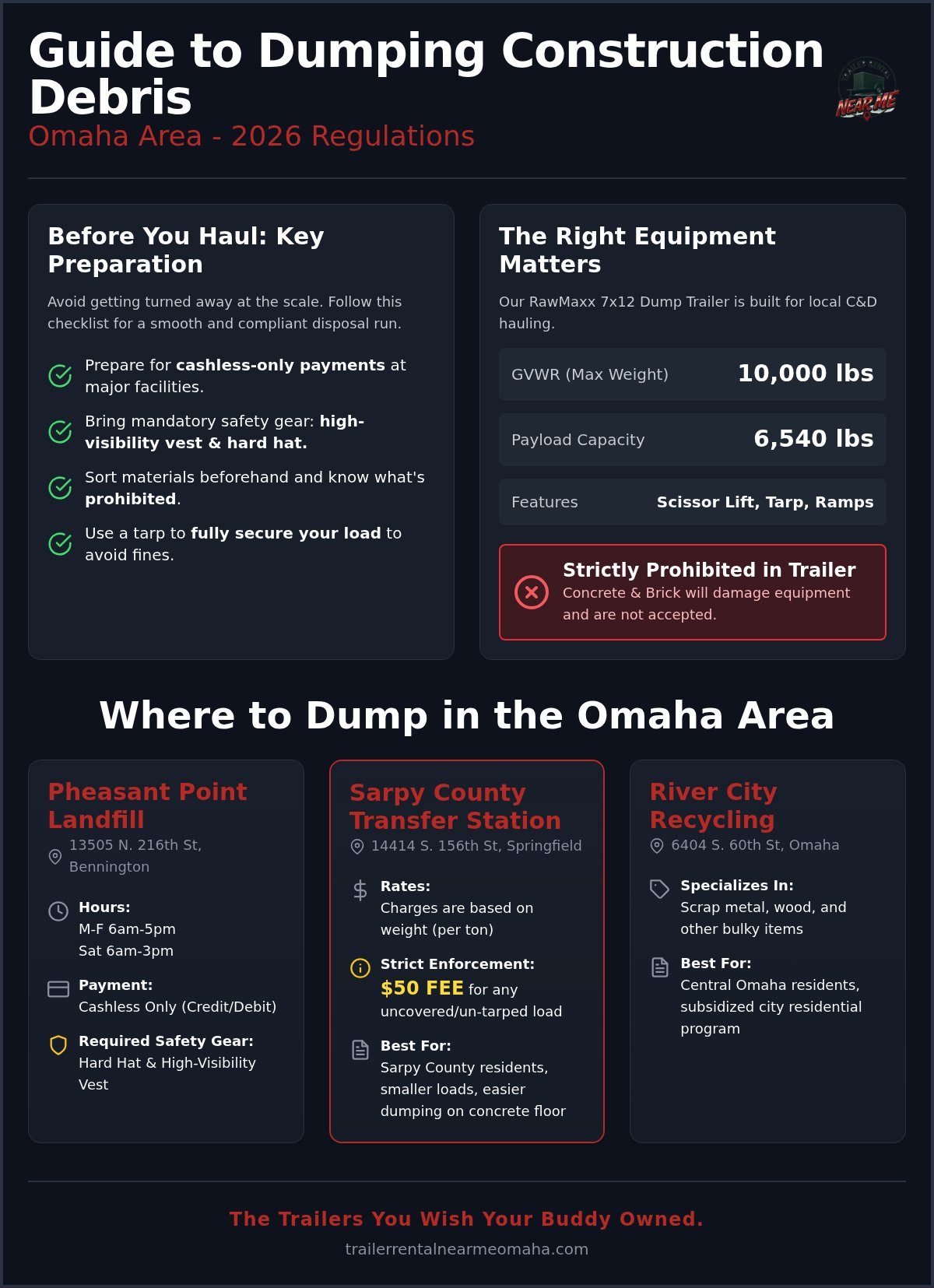
A successful trip to the landfill starts before you leave the driveway. Knowing where to dump construction debris Omaha residents generate is only half the battle. Proper preparation prevents wasted time and potential fines. Start by sorting your materials at the job site. Wood, drywall, and insulation should be packed tightly to maximize the 6,540-lb payload capacity of a 7x12 dump trailer. Loose packing creates air pockets that lead to extra trips and higher costs. Once your trailer is loaded, secure the spreader gate and deploy the integrated tarp. Local facilities like the Sarpy County Transfer Station enforce a $50 fee for any uncovered loads. Using the tarp keeps you compliant and prevents debris from scattering on local highways.
Before departing, verify the current hours and payment requirements for your chosen facility. Pheasant Point and River City are cashless operations. You will need a credit or debit card for the scale house. The standard procedure is consistent across the metro area. You'll pull onto the scale to record your "in-weight," drive to the tipping floor to empty the trailer, and then return to the scale for your "out-weight." The facility calculates your fee based on the difference between these two numbers.
Loading for Stability
Safe hauling depends on how you distribute weight. Place your heaviest allowed items directly over the axles of the 10,000-lb GVWR trailer. This centers the mass and maintains proper tongue weight for your tow vehicle. Avoid "over-topping" the trailer walls with lightweight materials. Even if the load is under the weight limit, debris stacked higher than the sidewalls is difficult to secure and can catch the wind during transport. If you have a massive volume of debris, plan for multiple trips rather than risking an unstable load. See our available dump trailers to find a unit that fits your project scale.
Final Disposal Tips for Omaha Residents
Handling mixed loads requires careful attention. If your load contains both standard trash and construction debris, the landfill may charge you the higher C&D rate for the entire weight. Keep your disposal receipts. These are valuable for project documentation, insurance claims, or potential tax deductions for home improvements. Always remember that your vehicle's towing suitability depends on its specific configuration, including manufacturer tow ratings and hitch capacity. Never exceed your vehicle's GCWR when hauling a full trailer to the dump.
Clear Your Job Site the Right Way
Handling renovation waste doesn't have to be a logistical nightmare. By matching your material weight to the right facility and following local safety protocols, you can avoid unnecessary fees and scale line delays. Whether you head to Pheasant Point or a local transfer station, knowing where to dump construction debris Omaha residents trust ensures your project stays on schedule. Remember to sort your materials at the source and keep your load covered to meet Nebraska state laws. Proper preparation keeps your costs down and your job site safe.
Our RawMaxx 10k dump trailers feature hydraulic scissor lifts to take the manual labor out of unloading at the landfill. We provide the heavy-duty equipment you need across La Vista, Omaha, and Papillion. These are truly "The Trailers You Wish Your Buddy Owned." You've got a plan and the right local disposal sites. Now, you just need the right gear to get the job done. We maintain our fleet to ensure mechanical integrity for every haul.
We're ready to help you finish your next project with the confidence that comes from using professional-grade tools.
Frequently Asked Questions
What is the closest landfill to Omaha for construction debris?
Pheasant Point Landfill in Bennington is the primary facility for large-scale construction and demolition waste in the metro area. If you're working in central Omaha, the River City Recycling and Transfer Station on South 60th Street is often the most convenient choice. Residents in Papillion or Bellevue may find the Sarpy County Transfer Station in Springfield closer. Always check the specific facility's current requirements before you start your haul.
Can I put concrete or bricks in a rental dump trailer?
No, concrete and brick are strictly prohibited in our 7x12 RawMaxx dump trailers. These materials are extremely heavy and abrasive, which can cause mechanical failure in the hydraulic scissor lift system or damage the trailer bed. If your project involves masonry removal, you'll need to find a specialized hauling service or use equipment rated specifically for heavy aggregate. We focus on providing reliable tools for standard renovation debris.
How much does it cost to dump a trailer load in Douglas County?
Fees at Douglas County facilities vary based on material weight and type. Pheasant Point reported a rate of $35 per ton in May 2026, while the Council Bluffs Recycling Center charges $75 per ton for construction debris. Most landfills charge by the ton with a set minimum fee for scaled loads. For residents wondering where to dump construction debris Omaha projects generate, it's best to call the scale house directly for current rates.
Do Omaha landfills require a specific type of vehicle for C&D waste?
Landfills don't require a specific vehicle class, but your setup must safely handle the weight of your load. Safety is the priority at the scale. You'll need a vehicle configured to meet manufacturer tow ratings and GCWR for your specific trailer. Additionally, facilities like River City and Pheasant Point require drivers to wear high-visibility vests and hard hats when outside their vehicles. We provide trailers that meet these heavy-duty requirements.
What items are strictly prohibited at the Pheasant Point Landfill?
Pheasant Point Landfill prohibits several items by Nebraska state law, including waste oil, liquid paint, lead-acid batteries, and waste tires. Large household appliances are also restricted from the main tipping face. If your construction project involves these materials, you must dispose of them at specialized facilities like "Under The Sink" for Douglas and Sarpy County residents. Sorting these items out at the job site prevents delays or fines at the scale house.
Do I need a permit to haul construction debris in Nebraska?
You don't need a specific permit to haul your own construction debris in Nebraska as a homeowner or contractor. However, you must comply with state load securement laws. Every load must be covered and secured to prevent debris from escaping. Local facilities like the Sarpy County Transfer Station enforce a $50 fee for uncovered trailers. Our rental units include integrated tarps to help you stay compliant with these regulations while traveling through Bellevue or Papillion.

Article by
Chuck Crom
Chuck Crom is the owner of Trailer Rental Near Me, serving Omaha, La Vista, Papillion, Bellevue, Gretna, Elkhorn, and the surrounding Nebraska and western Iowa communities. With years of hands-on experience towing, hauling, and helping customers choose the right trailer for the job, Chuck specializes in making trailer rentals simple, safe, and stress-free.
He writes practical, no-nonsense articles covering trailer safety, towing tips, weight ratings, loading techniques, equipment transport, landscaping projects, home renovations, vehicle hauling, and everything in between. His goal is to help renters avoid common mistakes, stay safe on the road, and get their projects done with confidence.
When he's not helping customers or creating educational content, Chuck is focused on growing a locally owned business built on honest advice, quality equipment, and exceptional customer service.


