
A standard 20-yard roll-off bin can crack a residential driveway before the first shingle even hits the bottom. You've worked hard to keep your property in top shape, so the last thing you want is an expensive concrete repair bill after the roof is finished. Choosing a roofing debris dump trailer rental offers a more agile, driveway-friendly alternative that keeps your project moving without the risk of structural damage.
We understand that managing logistics is often the most stressful part of a tear-off. It's frustrating to guess how many tons of architectural shingles a trailer can actually hold or to worry about complex local disposal rules. This 2026 guide will show you how to select the right equipment, calculate shingle weight accurately, and navigate Omaha's landfill regulations to save both time and money. You'll learn the technical specs of 10k dump trailers, how to avoid overweight fines at the scale, and the best practices for hauling debris through Papillion, Bellevue, and the surrounding metro area. We'll provide the practical data you need to stay on schedule and protect your bottom line.
Key Takeaways
- Protect your property by using rubber-tired dump trailers that prevent the driveway cracking often caused by heavy roll-off steel bins.
- Use "shingle math" to calculate the exact payload of your roofing debris dump trailer rental, ensuring you avoid overweight fines at the landfill.
- Verify your tow vehicle's hitch class and brake controller settings to meet Nebraska safety standards for heavy construction hauling.
- Optimize your workflow with professional tips on trailer positioning and debris layering to reduce labor time during the tear-off.
- Access local expertise for projects in Omaha, Papillion, and Bellevue, including streamlined booking for high-capacity 10k dump trailers.
Why Choose a Dump Trailer for Roofing Debris in Omaha?
A roofing dump trailer is a specialized, towable bin equipped with a heavy duty hydraulic lift system. It's built to handle dense construction materials like asphalt shingles, cedar shakes, and metal flashing. While many people think of a traditional roll-off dump trailer as their only option, a towable dump trailer offers distinct advantages for residential projects. It combines the high capacity of a dumpster with the maneuverability of a standard vehicle. This makes it an ideal choice for homeowners and contractors who need to keep a job site clean without sacrificing access to their property.
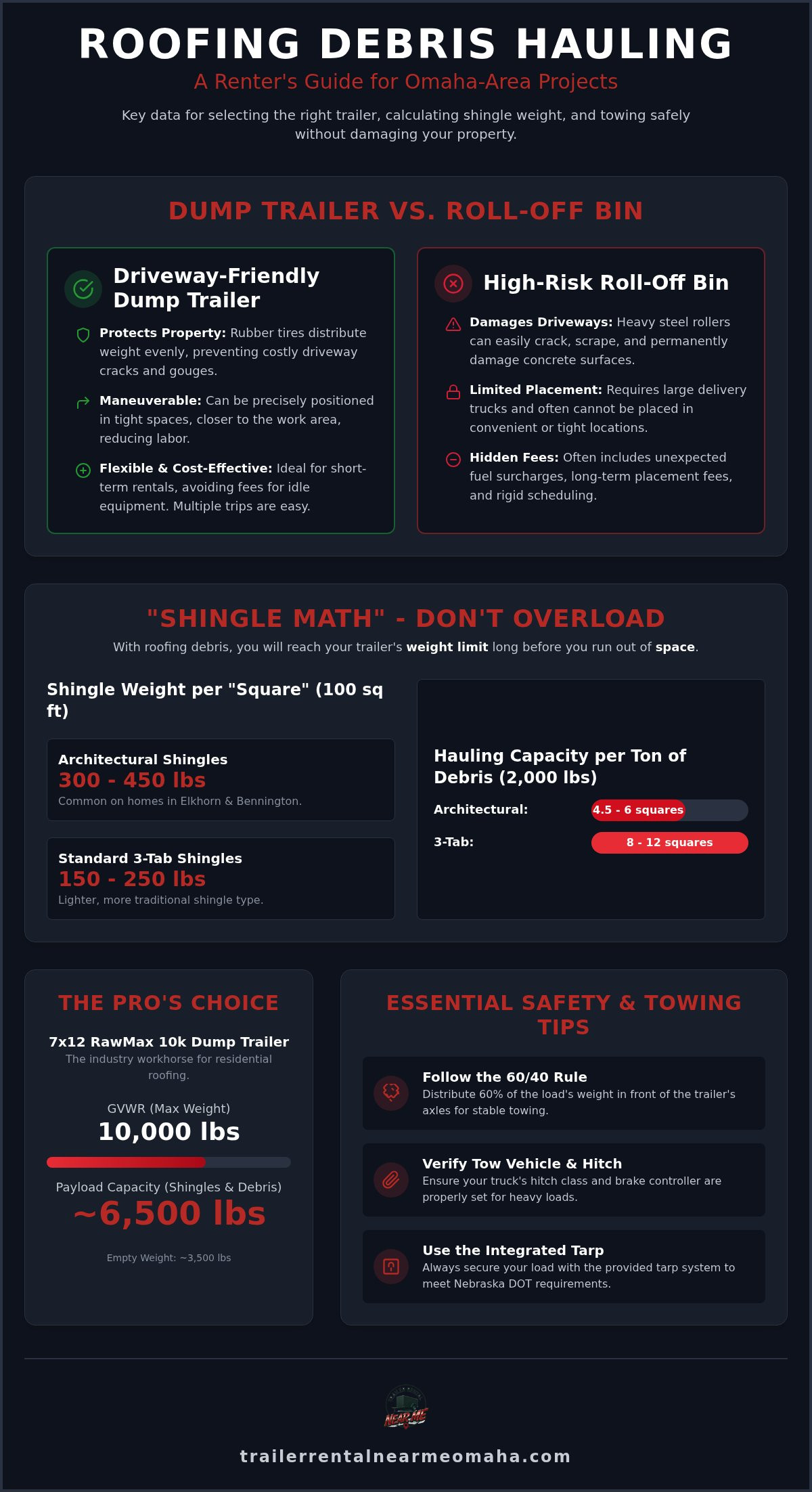
The most significant benefit is the "driveway friendly" design. Standard roll-off bins use steel rollers that can easily crack or gouge concrete under the weight of several tons of shingles. In contrast, dump trailers use rubber tires that distribute weight more evenly. This protects the investment you've made in your Omaha home. Since the trailer is hitched to a truck, it can be positioned with surgical precision. You can park it closer to the roof edge than a fixed dumpster, which significantly reduces the distance your crew has to carry heavy debris. For quick 1-2 day tear-off projects, the cost-effectiveness of a daily rental ensures you aren't paying for equipment to sit idle on your lawn.
Dump Trailers vs. Roll-Off Dumpsters
In tight neighborhoods like Papillion or Ralston, space is at a premium. A roll-off dumpster often requires a massive delivery truck that can't navigate narrow alleys or steep inclines. A roofing debris dump trailer rental is much more maneuverable. It fits into standard parking spots and won't block your entire driveway for a week. You also avoid the hidden fees common with dumpster services, such as long-term placement charges or unexpected fuel surcharges. If you finish a tear-off quickly, you can simply haul it away immediately. Contractors often prefer this flexibility for making multiple trips to the landfill in a single day, which keeps the job site organized and safe.
Benefits of the 7x12 RawMax 10k Model
The 7x12 RawMax 10k is the workhorse of the local roofing industry. Its 10,000 lb GVWR provides the strength needed for dense asphalt shingles without necessarily requiring a commercial driver's license in Nebraska. The high-capacity hydraulic lift ensures the load slides out in seconds at the landfill, so you aren't wasting time with manual unloading. Every 7x12 RawMax 10k Dump Trailer Rental includes an integrated tarp system. This is a critical feature to meet Nebraska DOT requirements for secured loads, preventing debris from escaping onto the highway during transport. It's a professional, no-nonsense solution for a demanding task.
Calculating Capacity: How Much Roofing Debris Can You Haul?
Many renters look at a 12-yard bin and assume they can fill it to the brim with shingles. This is a common mistake that leads to dangerous towing conditions and overweight fines. With roofing materials, you'll hit your weight limit long before you run out of physical space. Successful logistics for a roofing debris dump trailer rental require a focus on mass over volume. You need to know your payload capacity, which is simply the trailer's GVWR minus its empty weight. For a standard 10k trailer, this typically leaves you with roughly 6,500 pounds of actual hauling capacity.
Shingle math is the most reliable way to estimate your load. Standard 3-tab shingles weigh between 150 and 250 pounds per square. However, the architectural shingles found on many homes in Elkhorn and Bennington are much denser, weighing between 300 and 450 pounds per square. If you're stripping a 20-square roof of heavy architectural shingles, you're looking at up to 9,000 pounds of debris. That's more than a 10k trailer can handle in a single trip. Always check your roof's square footage and shingle type before you start the tear-off.
Roofing Squares to Tons Conversion
Estimating your tonnage is critical for staying within legal limits. A 10k dump trailer is the industry standard for small-to-medium residential replacements because it balances capacity with easy towing. For architectural shingles, one ton of debris covers roughly 4.5 to 6 squares. If you're removing 3-tab shingles, you can fit about 8 to 12 squares per ton. It's best to leave a safety margin of at least 10%. Don't load to 100% capacity; extra weight from moisture or old felt paper can push you over the limit quickly. You can view our available dump trailers to compare specs for your specific project size.
Managing Weight Distribution for Safe Towing
The 60/40 rule is the gold standard for loading. You should place 60% of the debris weight in the front half of the trailer bed, centered over or slightly ahead of the axles. This ensures proper tongue weight, which keeps the trailer coupled securely to your hitch. Improperly distributed weight is the leading cause of trailer sway. This becomes extremely dangerous when you're merging onto I-80 or traveling at highway speeds on Highway 370. Use the 7x12 bed dimensions to your advantage by spreading the heavy shingles across the tandem axles rather than piling them all at the rear gate. A balanced load keeps your truck's steering responsive and your brakes effective.
Essential Safety and Towing Requirements
Safety starts with your tow vehicle. You must ensure your truck is rated to handle the Gross Vehicle Weight Rating (GVWR) of the equipment. For a roofing debris dump trailer rental, this means having a towing capacity of at least 10,000 lbs. Don't rely on a bumper hitch; you need a frame-mounted Class IV or Class V receiver. Nebraska law requires functional trailer brakes for loads over 3,000 lbs. Your truck must have an electronic brake controller to synchronize with the trailer's braking system. This setup is critical for maintaining control when navigating the hills of Bellevue or stopping in heavy Omaha traffic.
Before you pull onto the road, perform a thorough pre-trip inspection. Check the tire pressure on both the truck and the trailer. Ensure the lug nuts are tight and all lights are functioning perfectly. Use the integrated D-rings inside the bed to secure any loose tools or equipment. A single shingle flying off at highway speeds can cause a serious accident. Taking five minutes for a safety walk-around prevents equipment damage and legal liability.
Hitch and Connection Standards
A secure connection is the foundation of safe hauling. Use a 2-5/16 inch ball rated for the trailer's weight. Adjust your hitch height so the trailer sits level when coupled; an unlevel trailer puts excessive stress on one axle and increases the risk of sway. NHTSA guidelines require safety chains to be crossed in an "X" pattern under the tongue. This creates a cradle that catches the coupler if it ever detaches from the ball. Always verify the 7-way plug connection to ensure the electronic brakes and lights are fully operational before heading toward Council Bluffs or Gretna.
Navigating Omaha Landfills with a Trailer
Backing a dump trailer into tight bays at the Pheasant Point Landfill in Bennington requires patience. Use small steering inputs and keep your eyes on your mirrors. When you're ready to unload, ensure the ground is firm and level. Operating the high-capacity hydraulic lift on a side slope can cause the trailer to tip over. Local compliance is non-negotiable. Nebraska Statute 60-6,304 requires all loose loads to be covered to prevent debris from escaping. Use the integrated heavy-duty tarp on the 7x12 RawMax 10k dump trailer to stay compliant and avoid "unsecured load" fines in Douglas and Sarpy counties.
- Tires: Check for proper inflation and tread wear.
- Lights: Test brake lights, turn signals, and markers.
- Chains: Cross them in an "X" pattern and secure hooks.
- Breakaway: Ensure the emergency cable is attached to the truck frame.
- Tarp: Confirm it is tightly cinched over the entire load.
Maximizing Your Rental: Professional Hauling Tips
Efficiency on a job site isn't just about how fast you can rip off old shingles. It's about how well you manage the debris flow. Choosing a roofing debris dump trailer rental gives you a mobile advantage, but you must use it correctly to see the best results. Strategic placement is your first priority. You should back the trailer as close to the roof's drip edge as possible. This minimizes the "carrying distance" for your crew, which reduces fatigue and keeps the project on schedule. In tighter neighborhoods like Ralston or Bennington, this maneuverability is exactly why trailers outperform stationary bins.
Layering the load is a technical necessity for safe hauling. Always place heavy asphalt shingles on the bottom of the bed. Lighter materials like old felt paper, flashing, and ridge vents should go on top. This keeps the center of gravity low and ensures the hydraulic lift has the necessary leverage to dump the load once you reach the landfill. Before you leave the site, check the tailgate and hydraulic hinges for trapped debris. Small pieces of shingle or nails can prevent the gate from sealing properly, which puts unnecessary strain on the locking mechanism during transit.
Protecting the Property
While dump trailers are "driveway friendly" due to their rubber tires, you can take extra steps to ensure zero property damage. Use wood blocks or "cribbing" under the tongue jack and stabilizers. This prevents the metal feet from sinking into soft asphalt or marking decorative pavers during the heat of an Omaha summer. Always perform a clearance check before engaging the hydraulic lift. Look up for low-hanging tree branches or power lines that could interfere with the trailer bed as it reaches its maximum height. Communicating with neighbors in high-density areas is also a professional touch that prevents complaints about noise or temporary access issues.
Efficient Landfill Cycles
Timing your rental is critical for projects in Bellevue or Gretna. You should coordinate the trailer's arrival with the exact start time of the roofing crew to avoid paying for idle equipment. Plan your route to the landfill ahead of time. Avoid residential zones with low speed limits or heavy school bus traffic to minimize transit time. Understanding peak hours at facilities like the Pheasant Point Landfill can save you hours of waiting in line. For more detailed technical guidance, you can Learn how to load a dump trailer safely to ensure every trip is as efficient as possible.
Reserve Your Roofing Dump Trailer in La Vista & Omaha
Choosing a locally owned business for your roofing debris dump trailer rental ensures you're working with partners who understand the specific demands of the Omaha metro. We know the local terrain, the seasonal weather shifts, and the strict requirements of the Douglas and Sarpy County landfills. This local expertise translates into better equipment maintenance and more practical advice for your project. Whether you're a professional contractor or a homeowner tackling a DIY tear-off, you need a partner who values your time and provides tools that won't fail under pressure.
Securing a 7x12 RawMax 10k dump trailer is straightforward through our streamlined online booking system. You can check real-time availability and lock in your project dates with just a few clicks. We offer flexible rental periods to match the pace of your work, including daily, weekend, or weekly options. If your project hits a delay or finishes early, our team is easy to reach for adjustments. Our La Vista staff provides personalized support, helping you verify payload limits and towing configurations so you can hit the road with confidence.
Serving the Entire Omaha Metro
We provide direct service to the surrounding communities, including La Vista, Papillion, Bellevue, Gretna, and Bennington. Picking up your rental locally is often the most efficient choice. It eliminates the expensive delivery fees and narrow scheduling windows associated with national chains. When you pick up from us, you get a hands-on walkthrough of the hydraulic lift and tarp system to ensure you're ready for the job site. You can view our full trailer inventory to see the exact specifications of our fleet.
Get Started on Your Roofing Project
If you have specific questions about hitch classes, tongue weight, or shingle tonnage, contact Trailer Rental Near Me today. Our goal is to provide the mechanical integrity and honest service you expect from a local partner. Before you arrive for pickup, please ensure you have the following items ready:
- Valid Driver's License: Required for all rental agreements.
- Proof of Insurance: Necessary for the tow vehicle.
- Capable Tow Vehicle: Must meet the GVWR requirements discussed in previous sections.
- Proper Hitch: A 2-5/16 inch ball and 7-way electrical plug.
Ready to clear your job site? You can schedule your dump trailer rental now to secure your dates. Contact Trailer Rental Near Me for any questions or to finalize your reservation.
Streamline Your Next Omaha Roofing Project
A successful tear-off relies on efficient logistics and the right equipment. By choosing a roofing debris dump trailer rental, you protect residential driveways from the structural damage often caused by heavy roll-off bins. This choice provides the mobility needed to navigate tight neighborhoods while keeping your job site organized. Adhering to shingle math and Nebraska's towing regulations ensures your crew stays safe and your project avoids costly overweight fines. Our heavy-duty 7x12 RawMax trailers offer a 10,000 lb GVWR that serves as the sweet spot for residential contractors and DIYers alike.
We provide straightforward local service from our La Vista location to help you stay on schedule. You can rely on our well-maintained fleet to handle demanding tasks without the hassle of national chain delivery fees. Our team is here to offer practical advice on payload and towing to give you peace of mind throughout the process.
Contact Trailer Rental Near Me to reserve your equipment or to ask any technical questions. We're committed to helping you complete your next project with quiet confidence and professional efficiency.
Frequently Asked Questions
How many squares of shingles can a 10k dump trailer hold?
A 10k dump trailer can typically hold between 15 and 30 squares of shingles depending on the material type. Architectural shingles weigh significantly more than 3-tab shingles; usually 300 to 450 pounds per square. This means you can safely haul about 15 to 20 squares of architectural shingles before hitting the 6,500 pound payload limit. Always calculate your specific shingle weight to avoid overloading the equipment during your roofing debris dump trailer rental.
Do I need a special license to tow a roofing dump trailer in Nebraska?
You don't need a Commercial Driver's License (CDL) in Nebraska to tow a 10,000 pound GVWR dump trailer if your total combined weight stays under 26,001 pounds. Most standard three quarter ton trucks paired with a 10k trailer fall well below this threshold. However, you must ensure your driver's license is valid and your tow vehicle is properly rated for the load. Check the Nebraska DMV guidelines if you plan to use a much larger truck.
What size hitch ball do I need for a 7x12 RawMax dump trailer?
The 7x12 RawMax 10k dump trailer requires a 2-5/16 inch hitch ball. Using a smaller 2 inch ball is dangerous and will cause the coupler to fail. Ensure your ball and ball mount are both rated for at least 10,000 pounds. It's also important to verify your hitch height allows the trailer to sit level. A level trailer ensures even weight distribution across both axles and prevents excessive wear on your tires during transport.
Can I put other construction debris in the trailer with the shingles?
You can include other construction waste like felt paper, flashing, ridge vents, and wood scraps. Shingles are the densest material, so they should be loaded first and centered over the axles. Lighter debris can be placed on top. Be careful with heavy items like concrete or bricks. These add weight rapidly and can push you over the payload limit before the trailer looks full. Always monitor your total tonnage at the landfill scale.
Will a dump trailer damage my driveway during a roofing job?
A dump trailer is significantly safer for your driveway than a standard roll-off dumpster. The rubber tires distribute the weight more effectively and won't gouge concrete or asphalt like steel rollers do. For added protection, you can place wood blocks under the tongue jack and stabilizers. This is especially helpful during hot Nebraska summers when asphalt is softer. It's the preferred choice for residential projects in Papillion, La Vista, and Bellevue.
How do I secure a load of roofing debris for highway travel?
Nebraska law requires all loads to be covered to prevent debris from escaping. You must use the integrated heavy duty tarp system included with your roofing debris dump trailer rental. Pull the tarp tightly over the entire bed and secure the edges before driving. This prevents shingles or nails from flying out at highway speeds. It also protects you from "unsecured load" fines in Douglas and Sarpy counties while traveling to the landfill.
What happens if I exceed the payload capacity of the rental trailer?
Exceeding payload capacity creates serious safety risks and can damage the trailer's hydraulic lift system. An overweight trailer is harder to stop and more prone to dangerous swaying on the interstate. You also risk heavy fines at the landfill scales if you're over the legal limit. If the load is too heavy, the hydraulic pump may fail to lift the bed, forcing you to unload the shingles by hand. Always stay within the 6,500 pound limit.
Does the trailer come with a tarp to cover the roofing waste?
Yes, every 7x12 RawMax 10k dump trailer in our fleet comes with a built in tarp system. This integrated roller tarp makes it easy to cover your load in seconds. You won't need to bring your own covers or bungee cords to stay compliant with local road safety laws. Simply roll the tarp over the debris and hook it into place. This keeps your job site clean and ensures a safe trip to the disposal site.

Article by
Chuck Crom
Chuck Crom is the owner of Trailer Rental Near Me, serving Omaha, La Vista, Papillion, Bellevue, Gretna, Elkhorn, and the surrounding Nebraska and western Iowa communities. With years of hands-on experience towing, hauling, and helping customers choose the right trailer for the job, Chuck specializes in making trailer rentals simple, safe, and stress-free.
He writes practical, no-nonsense articles covering trailer safety, towing tips, weight ratings, loading techniques, equipment transport, landscaping projects, home renovations, vehicle hauling, and everything in between. His goal is to help renters avoid common mistakes, stay safe on the road, and get their projects done with confidence.
When he's not helping customers or creating educational content, Chuck is focused on growing a locally owned business built on honest advice, quality equipment, and exceptional customer service.


